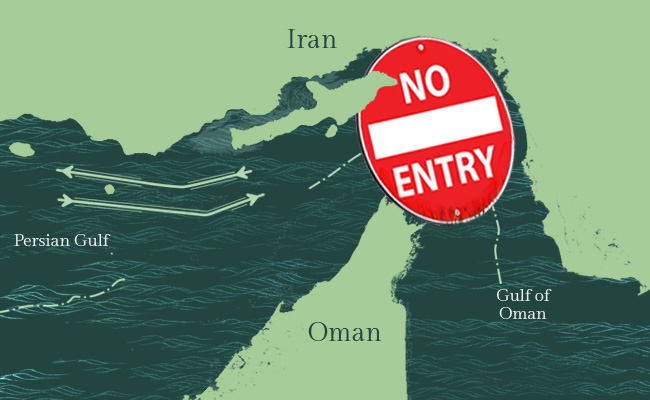

The initial reaction to the disruption of the Strait of Hormuz was predictable. Oil spiked. Markets panicked. Commentary followed the usual script – supply shock, crisis, contagion.
But something more interesting happened next.
The system didn’t break. It adjusted.
Tankers rerouted. US exports surged. Supply chains reconfigured. What looked like resilience was something else entirely: a repricing of the system.
From efficient to expensive
The global energy market has shifted from efficient, integrated and cost-optimised to fragmented, politically constrained and structurally more expensive.
The marginal barrel is no longer the cheapest available. It is the most accessible under constraint.
Adaptation has a cost
Yes, oil is still flowing. But now routes are longer, insurance is higher, and supply is politically filtered through rerouted flows, alternative hubs and bypass channels.
These are not temporary frictions. They are embedded costs.
That is how inflation returns – not through demand, but through degraded supply efficiency.
Why markets are misreading this
Recent price action tells the story.
Following last week’s US CPI print, driven largely by petrol, oil pulled back below $100. Bonds rallied. Duration found a bid. The move was interpreted as relief.
It wasn’t.
Oil remains historically elevated and, more importantly, structurally supported. The system has adjusted – but at a higher operating cost.
This is not normalisation. It is stabilisation at a more expensive equilibrium.
Second-round effects are already in motion
The implications extend beyond energy.
Fertiliser markets – heavily dependent on natural gas – are tightening. That feeds directly into agricultural production and ultimately into food prices. The transmission is slow, but predictable.
This is where inflation becomes embedded – not in the initial shock, but in the lagged consequences.
The policy constraint
Central banks now face a familiar problem.
The shock is supply driven. Growth is slowing. Inflation is rising. Policy tools are blunt in this environment.
Following the March US CPI re-acceleration, markets have already begun trimming their expectations of interest rate cuts by the Federal Reserve. The path forward is no longer a clean easing cycle. It is uncertain, reactive and volatile.
What this means for bonds
The duration rally looks more like relief than resolution.
For fixed income – and specifically South African government bonds – that matters.
Inflation floors are higher. Term premiums must adjust. And real yields remain supported.
We are already seeing long-end outperformance on relief days, but the follow-through is weak. Foreigners are still selling into strength, and real money – from institutional investors such as pension funds – is not chasing.
Rallies remain tactical, not structural.
Duration is still being distributed, not accumulated.
The real shift
This is not about oil. It is about the cost of keeping the system running.
The world has not run out of energy. It has run out of cheap, reliable energy.
Closing thought
Markets adapt quickly. But they do not always understand what they have adapted to.
This time, the adjustment is not a return to normal. It is a move to a more expensive equilibrium.
Kristof Kruger is head of fixed-income trading at Prescient Securities. He has spent more than 15 years in South African financial markets, moving from proprietary equity and derivatives trading into fixed income at Avior Capital Markets before joining Prescient Securities in 2023. Kristof specialises in South African government bonds, credit markets and emerging-market debt.
- What you need to know about bonds, now
- Smart trade for the Gulf meltdown: Don’t look
- Bond maven, author, investing evangelist: Cartesian’s Anthea Gardner
Top image: Wikimedia Commons/Rawpixel/Currency collage.
Sign up to Currency’s weekly newsletters to receive your own bulletin of weekday news and weekend treats. Register here.