


By now, most of us are (or should be) gatvol of Donald Trump. The US president has helped upend what was meant to be a breakout year for South Africa’s economy. But after Thursday, besides staggering fuel bills, South Africans could be paying more on their home loans, cars and credit cards too.
“Our expectation is that the SARB [South African Reserve Bank] will hike by 25 basis points, with the possibility of one or two further hikes in the cycle if the impact of the war [in Iran] broadens,” reckons Ninety One portfolio manager Adam Furlan.
Furlan supports the argument put forward by the bank’s monetary policy committee members that it cannot wait for the second-round effects of the oil shock to filter through before acting. “You act early, and acting early means that, in the long run, you have to hike less, and you have a smaller impact on the economy,” he says, echoing SARB governor Lesetja Kganyago.
“The aim is not to wrestle a single inflation print into submission, but to anchor expectations before the supply shock seeps into wage settlements and pricing decisions,” he says.
There’s another reason, though, why the bank should hike rates, argues ETM Analytics founder George Glynos: the rand. “You don’t want to stand out as a soft target among emerging markets because you did not respond to an inflation shock, and then you get negative speculation against you,” he tells Currency.
Rand attack
“I understand the whole counter-argument that this is a supply shock and monetary policy can’t control oil prices, but because I have monitored portfolio cross-border flows for over 20 years, one thing that I have witnessed on more than one occasion is the fact that if our interest rates are not sufficiently high enough two things happen: we don’t attract the kind of portfolio flows into bonds that help keep our current account deficit financed, and it doesn’t increase the cost of speculating against the rand,” warns Glynos.
It’s the same discipline the SARB applied in 2022, when central banks in developed economies waited too long after Russia invaded Ukraine, and found themselves scrambling to contain inflation. “With the benefit of hindsight, we believe that approach proved correct,” said Furlan in a recent note.
Or, as Glynos says: “I would prefer they do a pre-emptive hike of rates rather than doing nothing and then be forced to chase their tail down the line should things go bad.”
Since the latest conflict began with joint US and Israeli strikes on Tehran in late February, oil prices have surged more than 40%, sending South African petrol and diesel prices to record highs. Prices eased to below $100 a barrel this week on hopes of a peace deal, even as US and Iranian forces clashed near the Strait of Hormuz.
Volatile emerging markets
The conflict has also injected volatility into currency markets, with the rand swinging sharply on every headline out of Washington and Tehran. This week, though, hopes of a diplomatic breakthrough have offered some support to emerging-market currencies, including the rand.
“Easing tensions around Iran really do bode well for emerging-market currencies,” RMB trading structurer Kgothatso Baloyi told Bloomberg TV on Monday. Last week, the rand closed at about R16.50/$ – a key support level, she says – but by the start of this week, the currency had firmed to about R16.33/$ as traders responded to signs of de-escalation.
A firmer currency could offer some relief by softening imported inflation, particularly fuel costs, though Baloyi says this is unlikely to materially alter the SARB’s near-term thinking. She also expects a 25-basis-point hike this week. “The SARB has been very clear that maintaining credibility around the inflation target is critical,” she says.
Unfortunately, the rand remains hostage to geopolitics. A renewed escalation in Iran could quickly reverse recent gains, Baloyi warns, potentially pushing the rand-dollar exchange rate back towards R16.85/$ – and even R17/$ if that level breaks decisively.
Already, headline inflation has burst through the SARB’s new, lower target, climbing to 4% year on year in April, from 3.1% in March.
What goes up can come down
However, Furlan says a sharp reversal in oil prices, potentially triggered by easing tensions and the reopening of the Strait of Hormuz, could swiftly alter the outlook. “South African rates can react quickly to good news as well as bad,” he says.
Ninety One’s base case is for average inflation of 4.5% in 2026, peaking above 5% in the fourth quarter before easing through 2027. Against that backdrop, Furlan argues more than a full percentage point of additional hikes would push real interest rates into overly restrictive territory, particularly if oil prices retreat and inflation begins moderating as expected.
Not everyone expects the SARB to move immediately. Citadel chief economist Maarten Ackerman expects the central bank to hold rates steady until its next meeting, though he points out that South Africa’s hefty fertiliser imports from the Middle East will further raise input costs for the agricultural sector and further exacerbate food price inflation.
As Glynos says: “Not that I want to see my bond repayments go up, but if this gets resolved pretty soon and things normalise they can always reduce that rate in the not-too-distant future.”
ALSO READ:
- Inflation hits 4%, putting rate hikes firmly in play
- Fuel relief puts Godongwana (and Kganyago) in a bind
- Inflation looks contained. But just wait …
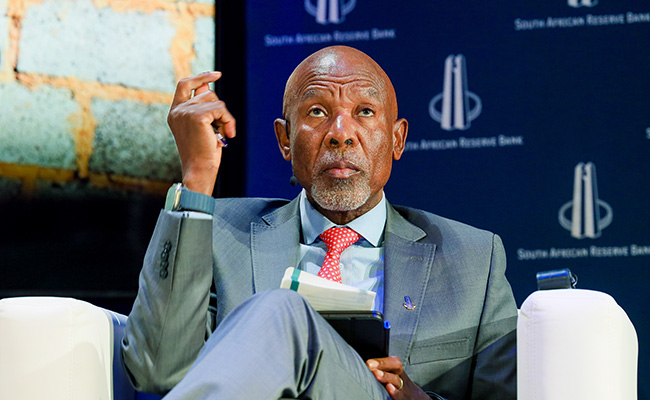
Top image: Reserve Bank governor Lesetja Kganyago. Picture: Gallo Images/Fani Mahuntsi.
Sign up to Currency’s weekly newsletters to receive your own bulletin of weekday news and weekend treats. Register here.



Couldn’t disagree more I’m afraid Mr Glynos. We already have high real rates, the ZAR remains “strong” and all of this inflation is purely supply driven, so all a rate hike does to hinder the economy even more. Pause and if the situations remains in two months time, then hiking for all the reason youngest become more appropriate.