
For those looking at data from March and April, you may be forgiven for thinking things were finally looking up for South Africa’s much beleaguered manufacturing sector. If only.
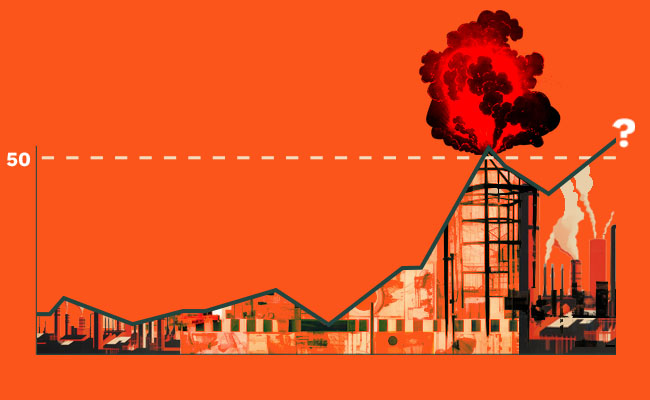
Data released this week showed that manufacturing production rose 0.9% year on year in March, reversing February’s 2.3% contraction. The Absa Purchasing Managers’ Index (PMI) released last week jumped to 52.6 in April from 49 in March, its first read above the 50-point neutral line since September. The S&P Global South Africa PMI climbed to 51.6, a 44-month high. Business activity, new orders and even employment ticked up.
But the world is almost 11 weeks into the Iran war. Oil prices have jumped nearly 50%. Diesel and petrol prices are at records, weighing on hard-pressed consumers. And as hopes of a resolution to the conflict ebb and flow, seemingly at the whims of Donald Trump and whoever is in charge of Iran, so do those that South Africa would escape the sub-1% trap it’s been caught in for the past decade.
“We had a number of tailwinds that were quite supportive for economic activity to start really picking up in a more meaningful way,” says Sanisha Packirisamy, group economist at Momentum. “We will still see that overall recovery coming through in South African GDP growth over the next couple of years, but I think it gets delayed because of all the headwinds that we’re currently facing.”
So, there is still hope. But it won’t be manufacturing-led, not if we take a deeper look.
First-quarter production fell 1% quarter on quarter on a seasonally adjusted basis. And the April PMI bounce, on both measures, came courtesy of factories stocking up ahead of a price shock they could see coming down the line.
That’s because factory bosses are worried about an acceleration in inflation, rather than expecting “a genuine strengthening in underlying demand”, says Sifiso Mkhwanazi, macroeconomist at Alexforbes. “If anything, domestic demand is likely to lose momentum over coming quarters as earlier tailwinds fade.”
South African businesses, says Packirisamy, learnt during Covid that “when there is a global supply chain problem, there are delays to when you get the product or a massive price impact that comes through, sometimes both”.
The price shock is already here
Absa’s PMI purchasing price index surged 20.7 points to 75.8 in March, the biggest single-month jump since September 1999, then climbed again to 85.6 in April – more than 30 points above where it started the year. S&P Global clocked the fastest input cost inflation in two and a half years, with roughly 22% of surveyed firms reporting cost increases since March. Supplier delivery times have lengthened sharply due to the blockade in the Strait of Hormuz. Export sales deteriorated through March and April.
The rebound into expansionary territory won’t be enough to rescue an industry that’s been in perpetual decline. Manufacturing contributes roughly 12% of GDP today – down from about 21% in 1994 – and supports more than 1.5-million direct jobs.
In the past two years, Bridgestone and 13 other automotive component manufacturers have shut. Nissan exited South African production, selling its Rosslyn plant – which built bakkies for more than 60 years – to Chinese carmaker Chery, and recently announced a $45m expansion in Egypt instead. British American Tobacco closed its remaining domestic factory last year.
Business Leadership South Africa CEO Busisiwe Mavuso, writing in her weekly newsletter, has warned that the country is heading deeper into deindustrialisation. The department of trade, industry and competition (dtic) under the ANC’s Parks Tau, she argues, “should be the part of government that welcomes manufacturers and helps them succeed. Instead … [it] is seemingly becoming a source of policy uncertainty that is actively driving investment away.”
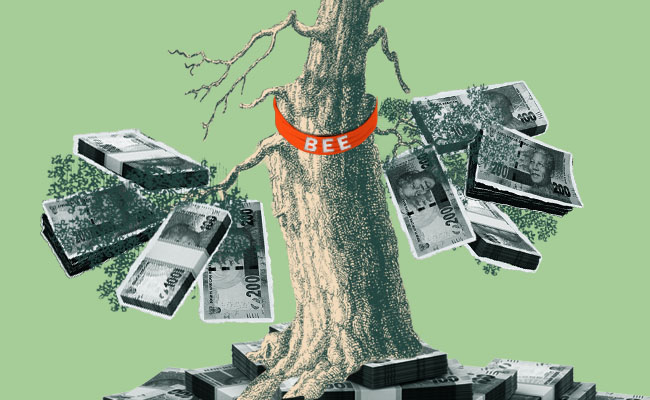
Yet another trigger, she says, is the dtic’s proposed amendments to the broad-based BEE regulations, which would strip original equipment manufacturers of their BBBEE status because their suppliers are not 100% black owned – cutting them off from the tax incentives that underpin the Automotive Masterplan. “Boards of directors, many sitting in capitals around the world, are looking at this regulatory uncertainty and comparing it to other markets,” Mavuso writes.
Packirisamy reckons the amendments will hit smaller players hardest while accelerating an exit already under way. “Your larger companies are probably better positioned to deal with an administrative burden. If you’ve got a bigger balance sheet, you can absorb the cost easily. But if you are a small enterprise or an entrepreneur in that space, then you face high compliance burdens, high regulatory burdens, and high legal burdens.”
The National Treasury is optimistic it can attract investors. Deputy finance minister David Masondo, addressing BlackRock’s recent infrastructure summit in Cape Town, sold a R1.07-trillion three-year infrastructure programme and a credit guarantee vehicle launching in July. “South Africa does not lack capital. Indeed, there are significant capital opportunities in [the] world and in this room today. The challenge is whether we can organise ourselves to finance it effectively, sustainably, and at scale,” he said.
Masondo, also from the ANC, did not touch on regulatory uncertainty in his speech.
The International Monetary Fund has cut its 2026 South African growth forecast to 1% from a pre-war 1.4%. That is the lowest projected growth of any emerging market or developing economy this year – including Russia, which is actually at war. The Washington-based lender has consistently warned that the country is being held back by regulatory barriers and red tape, slow progress with business and economic reforms, governance weaknesses and corruption.
Masondo and his colleagues should listen to Mavuso, and take a harder look at the data.
ALSO READ:
- Manufacturing meltdown: South Africa’s jobs crisis deepens
- Goodyear exit lays bare South Africa’s industrial decline
- Jobs crisis: Start with the easy wins
Top image: Rawpixel; Currency.
Sign up to Currency’s weekly newsletters to receive your own bulletin of weekday news and weekend treats. Register here.