

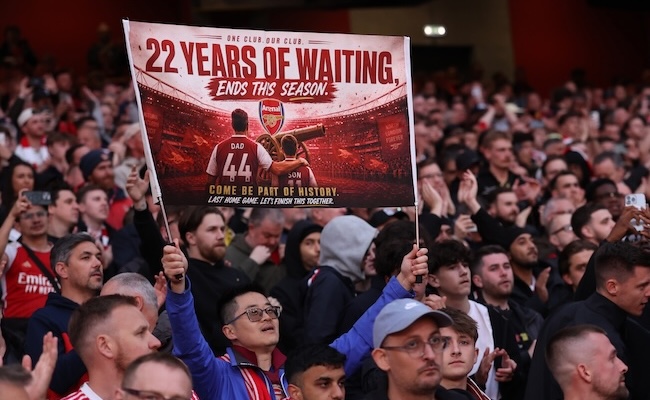

On Saturday May 30, Arsenal will walk out in Budapest to face PSG in the Champions League final. Having already been crowned Premier League champions, this match is a milestone: a chance to win the most prestigious trophy in football and secure the coveted double. Wherever my family is – Joburg, Sydney, Boston – we will all be watching. Win or lose, our phones will be buzzing with messages shared across continents, each move with the ball binding us together.
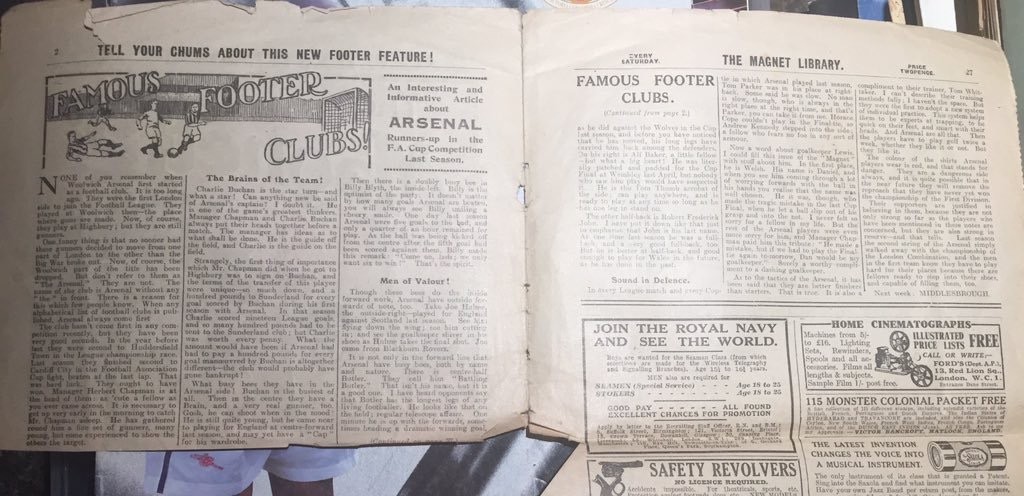
This connection did not begin yesterday. It stretches back almost a century, to 1927, when my father, Archie, a 12‑year‑old in the southern suburbs of Joburg, opened The Magnet, a boys’ magazine from England.
Inside was a “new footer feature” showcasing Arsenal. The article described how the club had changed its name from Woolwich Arsenal to The Arsenal, how they had moved their ground to Highbury, and how a new manager, Herbert Chapman, had “gathered around him a fine set of gunners – some very young, others seasoned enough to show the target”. That piece lit a spark in my dad, and from that moment his – and later our family’s – loyalty to Arsenal never faltered.
Glory and belonging
Chapman was not content with convention. He introduced tactical formations that gave Arsenal structure and balance. He pushed for numbered shirts, so players could be identified more easily, and for floodlights, so matches could be played under evening skies. He believed football was theatre as much as sport, and he wanted Arsenal to lead the way. For my dad, a boy living in the poorer suburbs of Joburg, it was an invitation into a life of glory and belonging.
And so, Arsenal became part of our family legacy. Each generation inherited not only the name of the club but the spirit of Chapman’s vision: that football could be more than 90 minutes on a pitch. It became a bond, a tradition, a way of connecting with one another.
We lived that vision with passion. There was the night in 1989 when Michael Thomas scored at Anfield in the last minute – a Roy of the Rovers moment – to hand Arsenal victory and the Premiership over Liverpool on goal difference. The greatest sporting moment of our lives. There was Wembley 1998, when Nicolas Anelka’s goals against Newcastle sealed the double. I was there with my two sons, Jonathan and Graham. Wembley was ours again in 2017 when we visited en masse to watch Arsenal beat Chelsea. It was my American grandchildren Gabriela’s and Gideon’s first taste of English football.
There were also the disappointments. The pain of the Champion’s League final in Paris in 2006, when goalkeeper Jens Lehmann was sent off after 18 minutes and Barcelona struck late. My young son Graham was there, living the agony in real time. And who could forget Nayim’s famous 45‑yard lob for Real Zaragoza in the 1995 European Cup Winners’ Cup final, and Wayne Rooney’s second goal for Manchester United in 2004 ending Arsenal’s 50‑match unbeaten run – a heartbreak etched as deeply as the triumphs. Each time Arsenal failed, Jonathan would wear a black armband on his school blazer. It was his private protest, his way of carrying the club’s misfortunes into the classroom.
A family language
Through all of this, Arsenal has been more than a club. It has been a family language. Chapman’s vision of football being more than just a game has been fulfilled not only on the pitch, but in our lives. In earlier days, when replica kits were rare, we improvised on the front lawn, inventing our own Arsenal colours as we played. Today, we buy the grandchildren new kits the moment they are released, along with scarves, mugs and memorabilia, tokens of loyalty passed down like heirlooms.
One of our biggest devotees was my brother Ian, who sadly passed away in January 2021 at the age of 69 from Covid. Our greatest regret is that he never lived to enjoy Arsenal’s triumph this season. When Arsenal were proclaimed Premier League winners, our first thoughts were of Ian and how he would have celebrated, how his joy would have filled our hearts.
And so, as Arsenal take the field in Budapest, we will watch together, message together, celebrate or mourn together. Win or lose, the connection endures. And in May 2027, we will mark 100 years since my father first opened The Magnet and discovered Arsenal. A century of devotion, a century of joy and tears, a century of family bound together by a club in North London.
Arsenal is not just our team. Arsenal is our story.
ALSO READ:
- Of werewolves and other animal instincts when Boks play England
- Kolisi and Bavuma: shaping the South African psyche
- Snow way! South Africa is headed to the Winter Olympics
Top image: Arsenal fans ahead of the Premier League match between Arsenal and Burnley at Emirates Stadium on May 18 2026 in London, England. Picture: Catherine Ivill – AMA/Getty Images.
Sign up to Currency’s weekly newsletters to receive your own bulletin of weekday news and weekend treats. Register here.






Good luck David!
Beautiful x