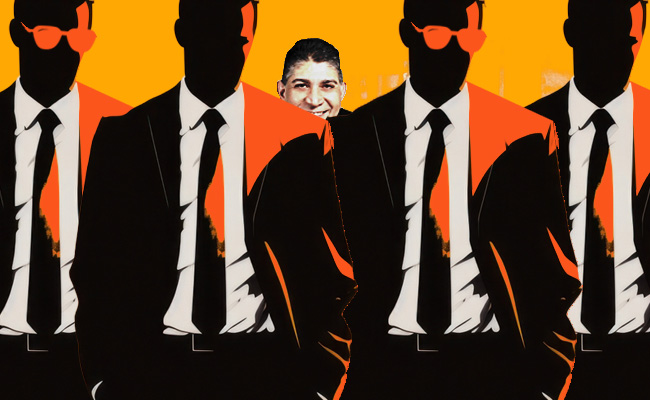

If you can see them, they’re probably not doing much good, other than acting as a 21st-century South African status symbol.
That, at least, is what the experts say. Discreetly.
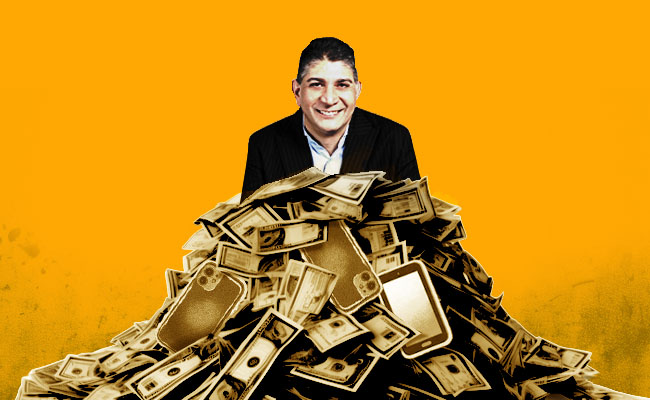
Which is why it’s almost impossible to find anyone who is prepared to say anything public about the R7.3m price tag on security services for Vodacom CEO Shameel Joosub. Other than that it’s fairly steep, even by international standards.
Though nowhere near as steep as the bills paid to protect tech CEOs such as Meta’s Mark Zuckerberg ($27m in 2024); Alphabet’s Sundar Pichai ($6.8m), Nvidia’s Jensen Huang ($3.5m); and Apple’s Tim Cook ($1.4m).
Ironically the tech geniuses of the 20th century such as Steve Jobs and Bill Gates had little in the way of personal security. Jobs was famously averse to personal security, while Gates only became obsessed after a Brussels trip in 1998 where he was hit in the face with cream pies.
Missing from the list of today’s heavy-hitters is Elon Musk, inevitably always the exception. According to records, Tesla spent a mere $500,000 on Musk’s protection in 2024. This seems remarkably modest for someone as immodest as Musk, and is probably explained by the fact he owns an entire security company, called Foundation Security. According to some reports, the firm is large enough and sufficiently well equipped to take over a reasonably sized nation, which may be appropriate now that Musk is wealthier than most reasonably sized states.
Like most things to do with the largesse heaped upon executives, the sums involved in security have become notably larger in recent years. Ironically, particularly in the case of Zuckerberg in the US, this is largely down to the increased number of threats from angry individuals venting on social media. Though they almost never materialise into action, the security industry treats the noise as justification for increased security. It’s also the case that social media has made it easier for kidnappers to track potential victims.
The one very notable exception to the general rule of actionless threats was the killing of United Healthcare CEO Brian Thompson in December 2024, allegedly by Luigi Mangione. The shocked response to this tragedy highlighted just how unusual it was. Inevitably it was used to justify a dramatic hike in CEO protection across the globe.
A fringe benefit
Getting back to Joosub’s security bill. It was in fact just R4m; the additional R3.3m was the tax Joosub was obliged to pay because of the fringe benefit he was getting.
But even R4m looks a little steep given that not so long ago this is what a CEO could expect to receive in total annual remuneration. Now it’s just a footnote – in this case, prompted by the South African Revenue Service (Sars). According to a Vodacom spokesperson, Sars issued a ruling in FY26 confirming that security arrangements constitute a fringe benefit accruing to the executive.
Regrettably, if history is anything to go by and this ruling leads to widescale disclosure, it will likely prompt a ratcheting up of security fees as remuneration committees argue their CEO deserves at least as much security as Vodacom’s, or whoever happens to be in their faux benchmarking exercise.
An “express kidnapping” or a “kidnap and ransom” (K&R) scenario is, of course, an appalling prospect – but, based on statistics, it’s not very likely. Indeed, it’s so rare that K&R insurance is currently reported to be very cheap. And, while any security expert will tell you how indispensable their services are, push them a little and they will acknowledge there have been no actual CEO kidnappings in at least the past 10 years.
Discreet details
Understandably, Vodacom was not prepared to share any details with Currency, but one expert describes what is involved in the sort of top-of-the-range service Joosub is likely to be getting.
Every move is planned and tracked, even on home territory. If the executive is moving out of his base, perhaps travelling to check operations in other African divisions, there will be an extremely detailed operation beforehand; checking the reliability of the local police force, checking the likelihood of unrest in the area, how the executive could be extracted in an emergency, where the nearest reliable medical services are located or, if required, a safe haven.
It is possible executive kidnappings are rare because of this sort of comprehensive planning. Or perhaps because a top-class CEO doesn’t make himself a target by flaunting his great wealth?
As it turns out, discretion is an extremely important part of security – both for the potential target and his security team. “Our role is to plan things so well that guns are not needed,” one consultant tells Currency.
Low key and electronic seems the way to go. One large, listed company says it doesn’t want to see big men in black suits wearing walkie-talkies. It wants something in the shadows. “An effective security detail will be there but not seen.”
Female protection officers are often regarded as a plus because they’re more inclined to de-escalate a situation that could quickly get out of hand.
Moral hazard
On the issue of comparisons, what are we to make of the “mere” R800,000 spent on Vodacom CFO Raisibe Morathi? Stripping out the tax Morathi was presumably also required to pay, this is equivalent to a security bill of about R450,000. In the world of top executives, is that even enough to pay for self-defence classes?
But back to Joosub’s R4m. It may look paltry in terms of Zuckerberg’s outrageously large security bill (though anyone who’s read Careless People will be unsurprised by it), but it happens to be equivalent to the annual pay of 15 of Vodacom’s lowest-paid employees. These are people who in their daily lives probably have to contend with far more security threats than the CEO. Such is the nature of South Africa’s violent crime.
Raise that point and you will promptly be told by a member of remco that from Vodacom’s perspective, Joosub’s loss would be significantly more than 15 times greater than the loss of one of the lowest-paid employees.
Which brings us to the matter of moral hazard. Assuming the remco’s traditionally ineffectual attempts to rein in executive excess, there could be no limit to the CEO’s security bill. This is not a good thing.
Part of the reason police forces across the globe are increasingly ineffectual when it comes to protecting their citizens is because powerful players – the executive class, the wealthy and politicians – are adequately covered by private services. This means there’s little effective pressure on governments to improve the general situation, less so even in South Africa, with its woeful state health, security and educational services.
ALSO READ:
- The gravy train economics of CEO pay
- New security laws ‘a total abuse of power’
- How rubber-necking execs gamed the JSE’s pay disclosure system
Top image collage: Vodacom.com; Rawpixel; Currency.
Sign up to Currency’s weekly newsletters to receive your own bulletin of weekday news and weekend treats. Register here.