
The reversal was almost as swift as its arrival.
Just weeks ago, markets were focused on rising geopolitical tensions in the Middle East, oil trading near triple digits, and whether the South African Reserve Bank (SARB) might need to move more aggressively than the 25-basis-point rate increase it delivered in May, when policymakers even considered a larger move. It wasn’t long before that – well, until Israel and US strikes on Iran started on February 28 – that market pundits were predicting a couple of cuts.
The latest abrupt turn followed a US-Iran agreement that eased fears of a prolonged disruption to oil supplies. Brent crude has since fallen sharply, dropping from around $110 per barrel at the height of the crisis in May to under $80, shipping through the Strait of Hormuz has begun to normalise, and local fuel prices look set to decline next month.
“The risks around South Africa’s inflation outlook have eased materially over the past two weeks,” says Lisette IJssel de Schepper, the chief economist at the Bureau for Economic Research (BER). “The most important development has been the sharp decline in oil prices following the US-Iran agreement.”
But, she warns, “they have not disappeared altogether”.
The SARB, which has staked considerable credibility on its inflation-fighting credentials and commitment to 3% inflation, is not ready to relax.
“We cannot wait to see the whites of inflation’s eyes – we have to act based on where we are,” governor Lesetja Kganyago said in an interview with CNBC Africa last week. “If we can detect that inflation is present, it is time to act.”
Improving inflation outlook
There are signs that inflation is beginning to spread through the economy as businesses raise prices to offset higher input costs. Core inflation, which excludes food and fuel, rose to 3.8% in May from 3.6%, while headline inflation accelerated to 4.5% from 4%.
The next major test will be inflation expectations. The BER is due to release its latest survey on June 30, less than a month before the monetary policy committee meets again on July 23.
Jee-A van der Linde, a senior economist at Oxford Economics Africa, says oil is expected to average in the mid-$80s a barrel in the second half of the year, down from roughly $93 in the first half, before falling further towards $70.
“The inflation outlook has improved,” he adds. “If you look at the spectrum of forecasts out there, the risks are probably tilted to the downside – meaning the forecasts are perhaps higher than they ought to be, given the lower outturn and better near-term outlook.”
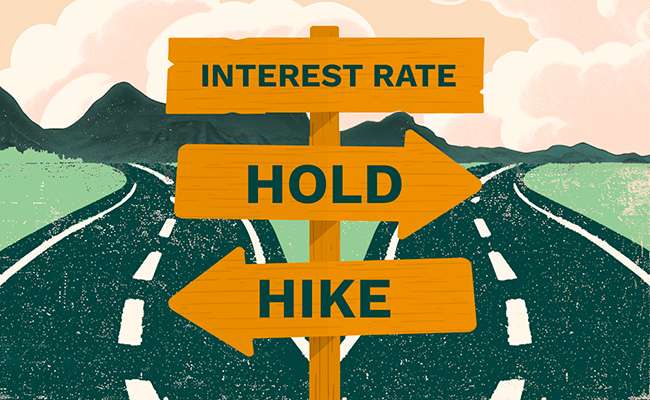
A 25-basis-point increase in July remains the most likely outcome – not because the data demands it, but because the SARB may not yet be confident enough in the improvement to stand aside.
“Our view is that the case for further tightening is less compelling than it was a few weeks ago,” IJssel de Schepper says. “But it is probably still too early to completely rule out another hike, especially should inflation expectations deteriorate, or geopolitical tensions flare up again.”
Van der Linde is similarly cautious.
“It’s a tricky one,” he says. “A lot is going to depend on inflation expectations. If there’s any risk of inflation expectations becoming unanchored over the medium term, the Reserve Bank will feel compelled to react, being forward-looking.”
His base case remains a 25-basis-point increase in July.
The Fed
Complicating the domestic picture is a constraint entirely outside the SARB’s control: the US Federal Reserve under its new chair, Kevin Warsh.
“It has been a very sharp repricing week” for bonds, says Kristof Kruger, head of fixed income trading at Prescient Securities.
“Lower oil and a firmer rand support South African bonds, especially where inflation-risk premium can come out,” he says. “But US 10-year yields around 4.5% remain the key constraint.”
If the 10-year holds below that level and Brent stays under $78, the local bond rally can run further, Kruger adds. If the 10-year breaks higher or the rand-dollar rate moves back above 16.50/$, the rally becomes much harder to chase, he says.
“A week ago, the market was focused on oil risk and whether the SARB would need to lean more hawkish,” Kruger says. “Since then, oil has fallen, the rand has held up better and the local inflation story has improved.”
But it has not been a “clean risk-on move”, he says. Fed hawkishness has increased, US real yields have moved higher, and the dollar remains firm against most major currencies.
“Oil is opening the door for South Africa,” Kruger says, “but US rates still decide how far we can walk through it.”
Kganyago is also watching developments in the US, though he argues South Africa entered this episode from a stronger position than in previous cycles.
“This time, we have positive real interest rates and have demonstrated commitment to a lower inflation target, which has helped anchor the currency.”
He also points to fiscal consolidation, reduced load-shedding, improvements in logistics and support from commodity prices other than oil, such as platinum and gold.
Subdued growth
Van der Linde agrees that South Africa’s starting position matters.
“There’s also the fiscal consolidation from Treasury and the commitment to it – the ratings agency actions have been favourable,” he says. “It’s a sentiment factor, and also some fundamental price tailwinds supporting the local currency.”
Growth, however, remains subdued. Van der Linde now expects the economy to expand by about 1% this year, down from forecasts of roughly 1.5% at the start of 2026. Investment remains weak, and households continue to face pressure from higher living costs, even if the decline in oil prices eases some of that burden.
“Central banks could probably act with less urgency – that’s a positive; it shouldn’t throttle economic activity more than it ought to.”
ALSO READ:
- Kganyago hikes rates — but bets are off from here
- The hidden warning in the GDP data: consumers are buckling
- Will oil prices ever truly go back to ‘normal’?
Top image collage: Rawpixel; Currency.
Sign up to Currency’s weekly newsletters to receive your own bulletin of weekday news and weekend treats. Register here.