
There is a particular kind of panic that comes with standing in front of a wall of wine at your local grocer. Even if you love the stuff, drink it and can order the second most expensive pinot noir on a menu with some authority, the sheer sprawl can be paralysing: rows of reds, rows of whites, labels with awards, imported things. And that is before anyone says “investment”.
Wine as an asset sounds like something discussed by people with temperature-controlled cellars and the will of steel not to open a bottle just because it is Friday.
The numbers do not make it any less intimidating. Liv-ex’s broad Fine Wine 1000 index was still down about 6% over five years by May 2026, while Champagne was up nearly 12% and Bordeaux down more than 16%. In other words, “wine” is not an asset class so much as a maze of geography, provenance, science and taste, and preferably one you should enjoy getting lost in.
Roy van Eck is the kind of guy who knows this terrain, but in a charmingly unsnobbish way. A wealth manager at Investec Wealth & Investment International in George, and a serious wine enthusiast, he did not grow up in a winemaking family. His route in was more varsity than vineyard: a group of friends had the bright student idea that everyone should bring two bottles, one to drink and one to store. Predictably, they drank everything.
Then one night someone arrived with bottles from his father’s cellar instead of the usual student plonk. Van Eck remembers taking a sip and realising that this red wine tasted nothing like the one before it. As an industrial engineering student, this irritated and delighted him. Why did it taste different? So he went to tastings, asked questions, did wine courses. The bug bit. Now he even has an alter ego, RoyWijn, he hosts talks on the topic for the bank, and he is always game for a chat and some knowledge spreading.
Taste before returns
What interests Van Eck is precisely the thing that terrifies casual drinkers: the barrier to entry. “You stand in front of a store and there are hundreds of wines,” he says. “It is overwhelming.”
His advice is simple: start with taste, not returns. Not the taste you think you should have, not the taste that will impress a sommelier, and not whatever is fashionable. Your own.
As he says, if you like a cheap wine, that’s great for your budget. If you like something sweet, fine. If you discover that what you love costs more, that is where the premium comes in. The first job is not to posture – it’s to pay attention.
Trust the stickers
It helps to have guides. The Investec Trophy Wine Show, which celebrated its 25th anniversary this year, judged 655 wines from 141 producers and awarded a record 50 gold medals. Its categories range from best-value reds and whites to old-vine wines, niche varieties, museum-class wines, port-style and dessert wines.
The 2026 results included Cederberg Five Generations Chenin Blanc 2024, which took Best White Wine Overall; Delaire Graff Estate Cabernet Sauvignon Reserve 2022 was Best Red Wine Overall; Nederburg The Winemasters Shiraz 2024 won Discovery of the Show as Best-Value Gold Medallist; and Allée Bleue Old Vine Cinsaut 2025 was Best Niche Red and Best Old-Vine Wine.
For Van Eck, the show is a benchmark. The wines are blind-tasted by people who know what they are doing. That does not mean every winning bottle will suit your palate, but it does mean the quality has been tested.
The cellar is not the stove
Van Eck is careful about the investment case. Wine should not be the thing that makes you wealthy. In a broader portfolio, it sits in the alternative asset bucket, and even there as a small allocation. There is money to be made, certainly, but wine is not cash. It takes time, care and provenance.
“The worst case is you have a bottle of wine, nobody wants to buy it and then you have to drink it all,” he says. There are shoddier outcomes, frankly.
Still, there are little points that you’ve got to pay attention to either way – like storage. A bottle kept in a hot kitchen cupboard is not going to fly. South African “room temperature” is not the genteel European version of the phrase. If you hope to sell a bottle later, buyers will want to know where it has been and how it has been kept.
Open the evidence
And yet, for all the talk of return, rarity and recognition, the most persuasive thing, Van Eck says, has little to do with finance.
“Wine is finite,” he says. Art remains on the wall. A bottle, once opened, is gone. You may find the same producer again, maybe even the same vintage, but you will not get that exact moment back: the friend, the table, the weather, the joke, the year of your life in which you drank it.
That is also where legacy comes in. A wine collection can be left behind as an asset, sure, but it can also be a kind of autobiography: these are the producers I loved, the years I thought mattered, the bottles I had the discipline or sentimentality to save. Its value is not only what it fetches, but what it says about the person who built it. I’d never considered it as something to inherit, and I love the idea.
But perhaps that is the least intimidating way to think about wine as an asset. Not as a cold alternative investment, and certainly not as a shortcut to riches. If it makes you some cash, happy days, but rather think of the stuff as a way of making pleasure more deliberate. Drink some. Store some. Learn a bit. As Van Ryk says, follow the producers, use the lists. Buy the best-value bottle as happily as the serious one. And if your grand investment thesis collapses, invite friends over and open the evidence.
ALSO READ:
- The R1m bottle of South African sweet wine – and what it means for the market
- From tariffs to terroir: South African wine remains world class
- From Bordeaux to Bottelary: why French wine capital loves the Cape
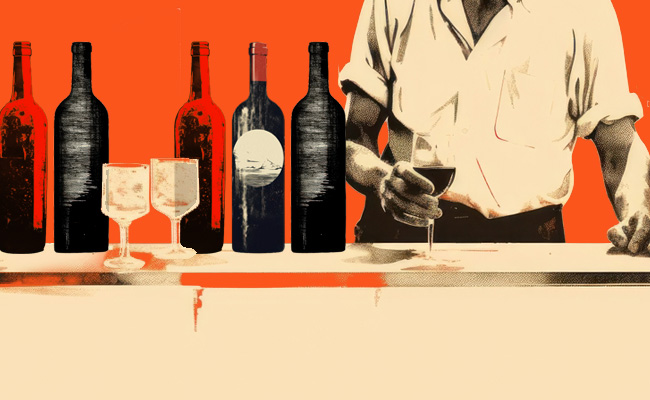
Top image collage: Rawpixel; Currency.
Sign up to Currency’s weekly newsletters to receive your own bulletin of weekday news and weekend treats. Register here.