
South Africa is fast becoming an investment destination of choice for the world’s rich and famous. That much is clear from the arrival last month of Forbes Global Properties, an invitation-only international network reserved for the crème de la crème of real estate brokerages.
As CEO Keegan Steyn tells it, the company’s launch in South Africa comes on the back of “exponential” growth in foreign buyer interest in recent years. He believes the country remains “largely untapped with huge growth potential” – especially beyond the traditional buyer markets of the UK and Europe.
So it’s no surprise that big-ticket international buyers have been setting new price records. Take Cape Town’s Atlantic Seaboard, the area that stretches from the V&A Waterfront to Sea Point, Fresnaye, Bantry Bay, Clifton, Bakoven and Camps Bay to Llandudno. Notable deals on this pricey stretch of real estate include Pam Golding Properties selling two adjacent vacant stands of 2,700m² in Clifton’s coveted Nettleton Road for a hefty R170m last year to a Spain-based multinational entity, which apparently plans to build a colossal trophy home on the site.
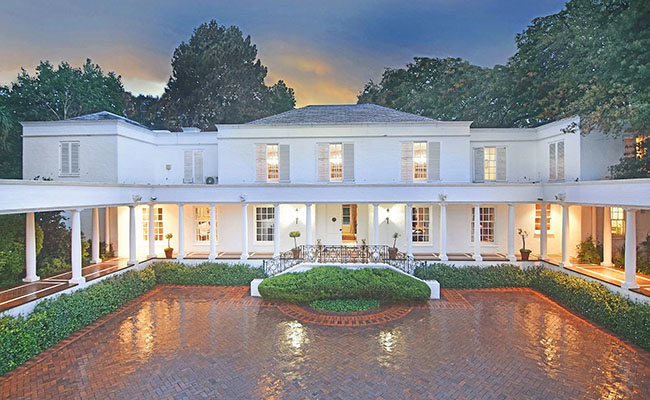
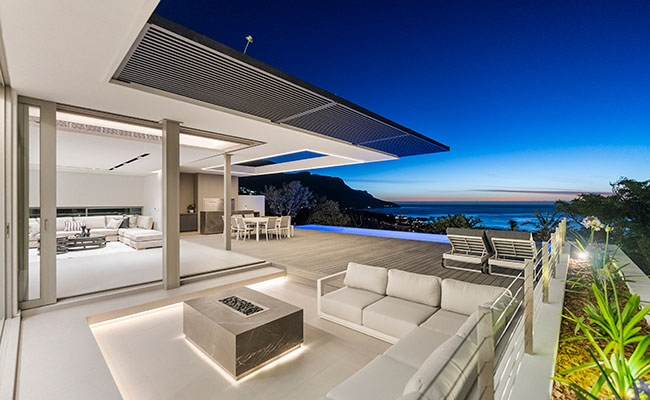
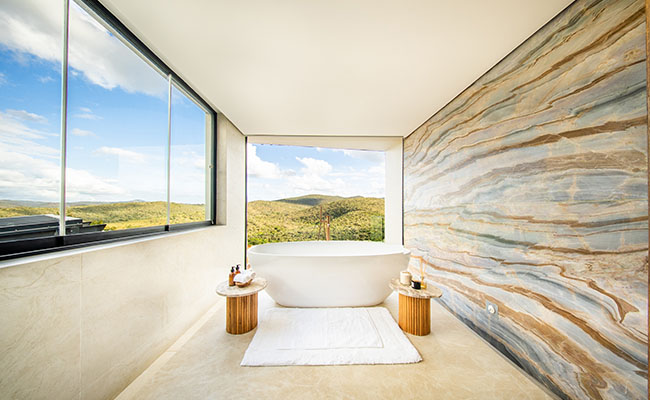
RE/Max Living recently sold a R92.5m three-level designer home in The Glen, Camps Bay, to a Switzerland-based family who plan to use it as a holiday home. A few streets away, a Mexican buyer splashed R78m on a multilevel modernist mansion, while an investor from Cameroon paid R53m for a Bantry Bay villa.
Ross Levin, licensee for Seeff Atlantic Seaboard and City Bowl in Cape Town, says there’s been a notable uptick in sales to UK, German, Dutch, French and US buyers in the past two to three years. That comes on the back of weaker European economies and rising geopolitical tension in Eastern Europe and the Middle East. Levin cites Cape Town’s cosmopolitan vibe, outdoor lifestyle and fantastic weather as key attractions.
Referring to figures from Western Cape residential sales database PropStats, Levin notes that 17 of the 48 R20m-plus sales recorded on the Atlantic Seaboard in the first half of 2026 went to international buyers (about 35%), while foreign citizens accounted for two of the six R50m-plus sales recorded year to date on the Atlantic Seaboard.
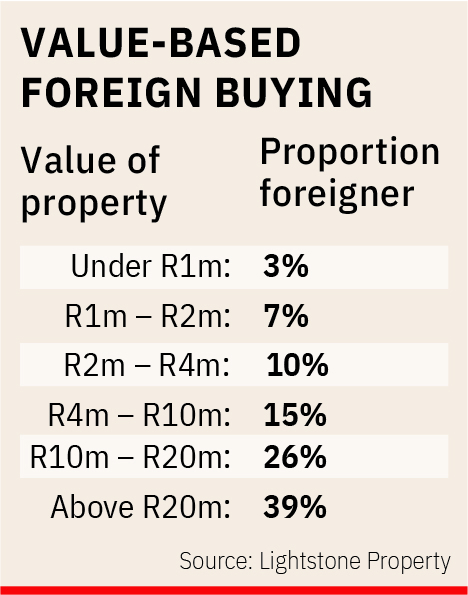
Research by data analytics firm Lightstone confirms that foreigners are particularly active in the R20m-plus bracket. In fact, a sizeable 39% of all R20m-plus sales in the 10 years to end-2025 went to international buyers, including foreigners and foreign-born South African citizens. Lightstone’s figures are limited to natural persons/individuals and exclude sales involving companies or trusts.
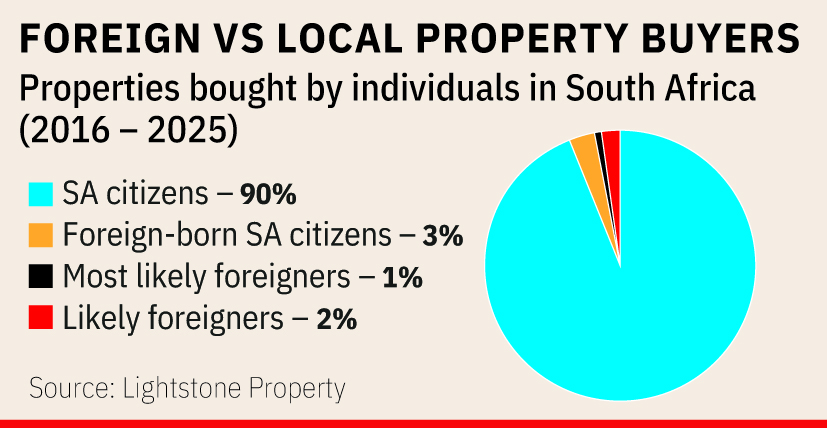
But Hayley Ivins-Downes, Lightstone’s managing executive for real estate, says foreign investment has not just been about the upper end of the market or the Western Cape. She notes that foreigners were responsible for 26% of all transactions across South Africa in the R10m-R20m price bracket and 15% of sales between R4m and R10m.
However, once sales below R4m are added to the equation – accounting for 90% of all housing sales in South Africa – foreign participation drops to a mere 6% across all price bands (see table below). So overall, foreign buyers make up less than one of every 17 property sales in the country.
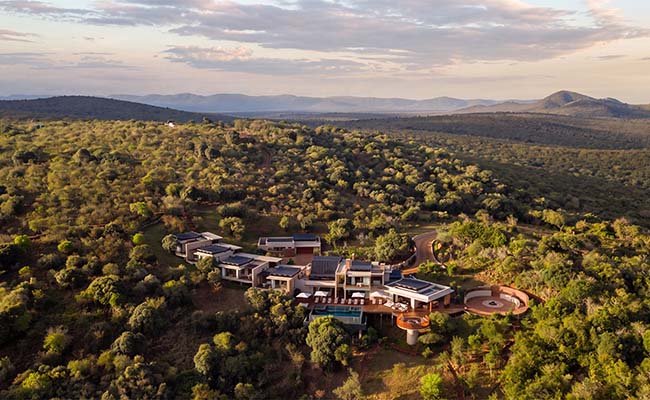
While the proportion of foreign buyers above R1m is highest in the Western Cape at 11%, it’s only slightly ahead of Gauteng’s 10.1% and Limpopo’s 9.1%. Limpopo’s game reserve and estate corridor in the Hoedspruit, Blyde River Canyon and Maruleng areas has become a magnet for wealthy foreign leisure and lifestyle buyers, says Ivins-Downes. Foreign purchases in Gauteng are dominated by immigrants who have permanently settled in the country.
Ivins-Downes adds that while there is little difference in foreign volumes (sales numbers) between the Western Cape, Gauteng and Limpopo, the average price paid by foreigners in the Western Cape and Limpopo significantly outstrips that of Gauteng. She says that explains why the combined value of properties bought by foreign buyers in Cape Town over the 10-year period came to R153bn, compared with only R107bn in Joburg.
The Atlantic Seaboard has a particularly high concentration of foreign buyers. Ivins-Downes says in Llandudno, for example, two of every three properties sold over the past decade went to a foreign buyer at an average value of R29.2m. Outside of Cape Town, she cites Ballito, Salt Rock, Sheffield Beach and surrounding beachfront estates such as Simbithi and Zimbali on the KwaZulu-Natal North Coast, alongside Knysna and the Overstrand area, including Hermanus, Betty’s Bay and Pringle Bay, as the largest foreign-buyer markets. Zimbali boasts an average foreign-buyer property value of R8.1m.
Keeping it exclusive
The launch of Forbes Global Properties in South Africa marks the brand’s first entry into Africa and takes its global footprint to 35 countries. It’s a strong endorsement of the country’s appeal as a global property hotspot.
Steyn reckons that the diverse lifestyle investment opportunities – from boutique vineyards and wine farms to game reserves, golf and equestrian estates, coastal reserves and beachfront destinations – have become a huge attraction for high net worth and eco-conscious international buyers.
He notes that South Africa’s real estate offering aligns with a mindset shift among the world’s wealthy. “Traditionally, how much square meterage you were getting was key for high net worth buyers. That’s no longer important. Today, it’s all about nature-based and experience-led lifestyle purchases.” He adds that trophy homebuyers are increasingly looking for unique architectural and historic significance. “It’s less about size and more about the story behind the property.”
Of course, South Africa is appealing from a price point of view too. Steyn says security concerns are also no longer top of mind given the rising geopolitical tensions and war in other parts of the world.
But how does he plan to gain a slice of the competitive luxury property market dominated by big established local real estate brands such as Pam Golding Properties, Seeff Properties, RE/Max and Sotheby’s Lew Geffen International Realty?
Steyn says he’s not chasing high volumes. “We’re a boutique advisory-led real estate firm. We’re very selective and only represent the most exceptional homes.”
Most local real estate brands work across all price segments, but Forbes is a specialist that focuses only on the top tier of the market. Members also have access to the company’s US-based in-house production teams that have the expertise and resources to create best-in-class visual stories and marketing material.
The biggest advantage, says Steyn, is that South African sellers can now showcase their properties to Forbes’ international audience of 167-million digital monthly visitors, a global reach that he says is unmatched. “There’s no other real estate brand in the world that can claim this level of media exposure.”
Driving up prices?
Of course, hard currency property buyers provide a much-needed fixed-investment boost to South Africa, and support tourism and general consumer spending. Still, Lightstone’s numbers fuel a growing debate over housing affordability and whether foreigners are pricing locals out of the market – especially in Cape Town, where prices continue to climb.
Data from mortgage originator BetterBond shows that the average house in the Western Cape came to R2.4m in June, 42% more than South Africa’s average of R1.7m. BetterBond figures also show that foreign buyers forked out an average R3.94m in the Western Cape in the first five months of 2026, nearly 30% up year on year (based on purchases by BetterBond’s foreign clients).
While it’s true that international buyers with pounds, euros and dollars can pay higher prices for bricks and mortar given the favourable rand exchange rate, industry players say semigration to the Western Cape and a “local is lekker” trend among well-heeled South African holiday home buyers have provided a much bigger underpinning for demand – and prices.
Grant Smee, CEO of Only Realty Property Group, dismisses the narrative that foreigners are to blame for pricing locals out of the Cape Town housing market. He says it’s a notion that overstates the impact that international high net worth individuals have on the broader housing market and understates the real drivers of demand and prices. These, he says, include genuine supply constraints amid limited land for new developments in sought-after areas, semigration for a better lifestyle, security, municipal service delivery and perceived stability, as well as a return of expat capital.
Smee notes a rising wave of South African expats who earn foreign currency investing back into the South African housing market with additional buying power, a trend he says is also increasingly noticeable along the West Coast, Garden Route, the North Coast and premier nodes in Gauteng.
ALSO READ:
- How the South African luxury home is being reimagined
- Joburg’s grand property revival
- Balwin’s buyout: the right move, long overdue
Top image: Three-level designer home in Camps Bay, sold for R92.5m. Picture: supplied.
Sign up to Currency’s weekly newsletters to receive your own bulletin of weekday news and weekend treats. Register here.