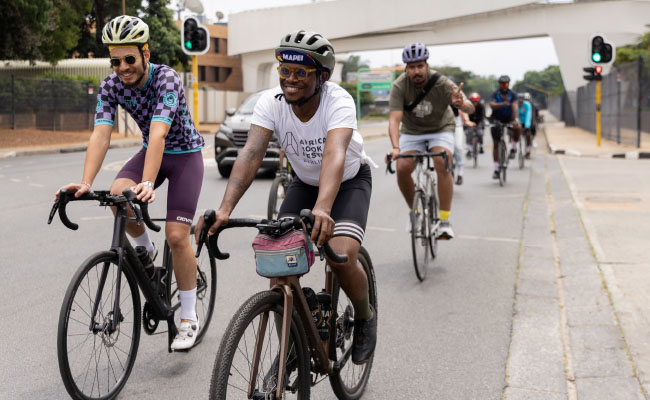
For those who cycle in Joburg, the sense of exposure is constant. Riders learn to anticipate impatient overtakes, sudden lane changes and drivers who appear startled to find bicycles sharing the road.
It is a daily negotiation for space in a city whose streets were largely designed around cars. That negotiation unfolds across the many different roads and streets where speed and distance shape how people move through the city. For cyclists, the result is a landscape where survival often depends as much on awareness and instinct as it does on the rules of the road.
Urban mobility researcher Njogu Morgan says that imbalance reflects a long history of planning decisions that prioritised cars over other road users.
“The history of car-oriented planning that settled in from the 1930s made it that roads were perceived as spaces for motor vehicles. Nowadays any other users, including pedestrians, are seen as not belonging there,” he says.
That legacy continues to shape road culture across the city. Cyclists are legally entitled to use the road, yet many riders describe being treated as intruders in a space assumed to belong to cars.
Recent cycling deaths in Joburg, including that of David Sejobe, a security guard at MultiChoice, have again drawn attention to the risks cyclists face. Sejobe was killed in a hit-and-run while cycling to work from Orange Farm in January. A Critical Mass ride held recently, between Rosebank and Randburg, brought riders together to highlight those dangers and call for safer streets.
Ambition vs execution
But researchers and cycling advocates say the issue runs far deeper than individual tragedies.
Roland Postma of the Active Mobility Forum says Joburg has long acknowledged the importance of non-motorised transport in its policy documents. Translating that ambition into infrastructure on the ground has proved far more difficult.
“The problem wasn’t the vision,” he says, but rather the execution. “The lanes aren’t connected and they aren’t protected. If infrastructure isn’t connected and protected, people won’t use it.”
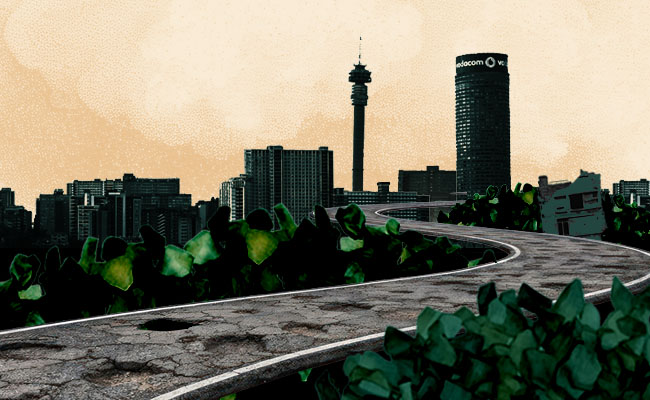
Several cycling lanes introduced around the 2010 World Cup remain fragmented and some end abruptly. Others disappear at intersections or are routinely occupied by parked cars. In practice, cyclists often find themselves pushed back into fast-moving traffic.
For Postma, the result is a system that discourages everyday riders rather than enabling them. “If the infrastructure doesn’t form a network, it doesn’t really work,” he says. “You need continuity and protection so that people feel safe using it.”
Morgan agrees that road safety remains one of the biggest barriers preventing more people from cycling in Joburg. “This is a critical question. Road safety is a major barrier for many potential cyclists.”
Protected cycling routes that physically separate bicycles from vehicles can reduce risk. Yet Morgan argues that infrastructure alone cannot undo decades of car-dominated thinking. “The most effective and cheaper option would be a cultural change so that motorists see cyclists as legitimate users of roads. But this takes a long time. Very long,” he says.
In the shorter term, he believes stronger leadership from local government is needed to push infrastructure development and enforce road safety rules.
‘Everything is political’
The debate about cycling infrastructure also touches on broader questions about mobility and inequality in Joburg.
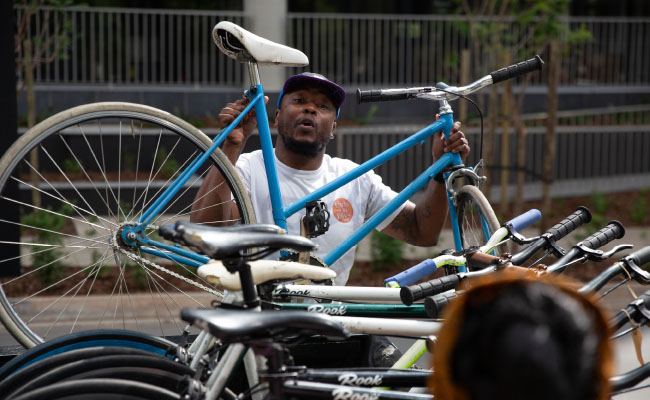
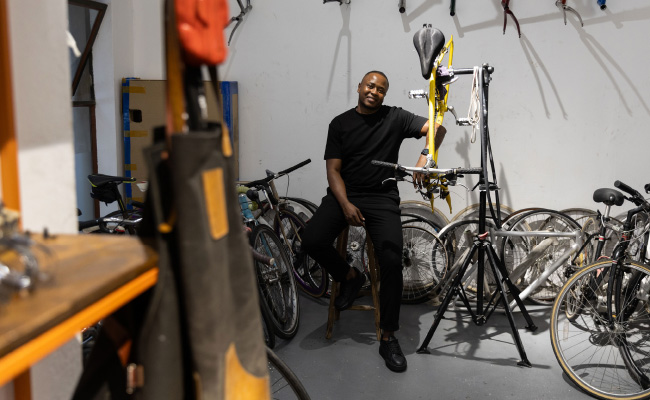
For Titi Mashele, co-founder of the Soweto cycling collective Biking Bandits, riding a bicycle in the city is about more than transport. “Everything is political. When you’re riding a bike in spaces where you’re not expected to be riding, you’re taking up space,” he says.
Biking Bandits began during the Covid pandemic as a small group of friends riding together in Soweto. What started as informal rides has grown into a visible cycling community that moves across different parts of the city.
Mashele says those rides challenge assumptions about who cyclists are and where they belong. “People think cycling is only for certain people, certain neighbourhoods. But when we ride through the city, we are saying we belong here too,” he says.
For many riders, the bicycle is also a practical response to the realities of Joburg’s geography.
Morgan’s research suggests bicycles once played a far more visible role in Joburg’s urban life. In the early years of the city, cycling was common and even encouraged by municipal policy. Workers received subsidies to buy bicycles and public messaging acknowledged the dangers posed by motor vehicles.
“There is really an enormous amount that can be learnt from the past,” Morgan says.
Lessons from the past
Some of those lessons could still apply today. Morgan suggests that subsidies for electric bicycles could make long-distance commuting more feasible for working-class residents who face vast travel distances across the city.
He also believes cycling culture needs support across social groups.
“Cycling for transport needs to be embraced by all sectors of society, especially the middle and upper class … they have the leverage to put pressure on authorities and demystify cycling as a working-class practice,” he says.
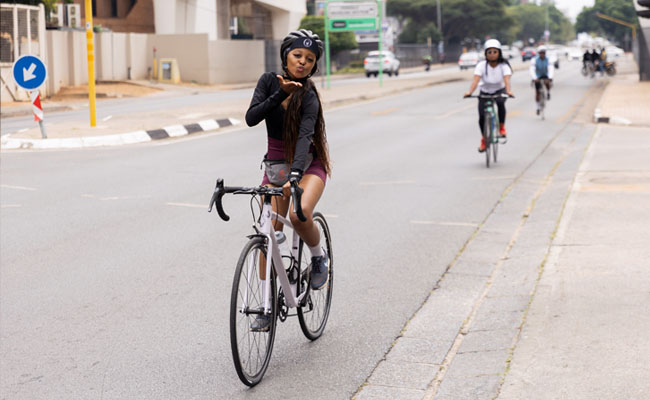
There are signs that such a shift may already be emerging. Activist groups and cycling collectives have been organising community rides and building new visibility for cyclists on Joburg’s streets.
“I am very positive about this,” Morgan says. “There are bottom-up activist groups doing a lot to create a culture of cycling.”
This story is produced by Our City News, a non-profit newsroom that serves the people of Joburg.

ALSO READ:
- Joburg, step by step
- The really useful guide to the best places to eat, shop and explore in Linden
- Borrow now, pay later: Joburg’s budgetary balancing act
Top image: Titi Mashele, co-founder of Biking Bandits, at a ride in Joburg. Picture: Our City News/James Oatway.
Sign up to Currency’s weekly newsletters to receive your own bulletin of weekday news and weekend treats. Register here.