
The mess in South African law enforcement is about as clear as Donald Trump’s reflecting pool. That’s to say, opaque, viscous, with a touch of swamp. And with lurking nasties whose shapes we have yet to discern.
It also happens to be an alphabet soup.
There’s the IGI – or inspector-general of intelligence – suspended last year after an unspecified complaint about his conduct. Also, it happens, after an investigation into CI.
CI would be crime intelligence – a powerful, well-resourced and murky unit in the police headed by lieutenant-general Dumisani Khumalo, who was arrested by Idac last year for the alleged irregular appointment of Dineo Mokwele to the position of brigadier; he was back in the crosshairs last week.
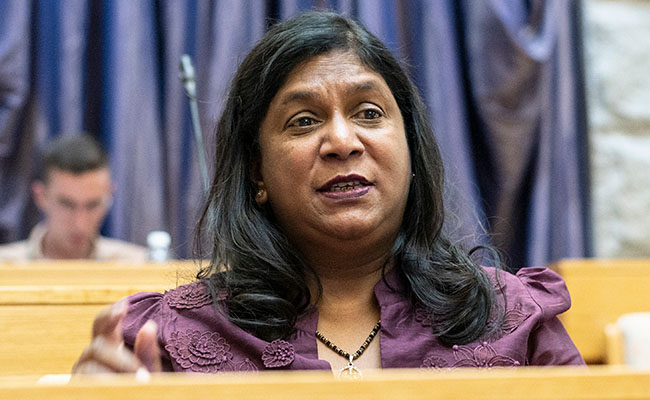
Idac, of course, is the Investigating Directorate Against Corruption, headed by Andrea Johnson. It performed a perfect pirouette last week, issuing and then unissuing arrest warrants for Khumalo and major-general Nozipho Madondo for alleged impropriety around Madondo’s security vetting.
In the mix is former KwaZulu-Natal provincial police commissioner and champion of the PKTT (political killings task team) Nhlanhla Mkhwanazi, who went off-piste at a briefing last year, alleging political interference in the South African Police Service (SAPS), and infiltration of the SAPS by organised crime. That briefing led to the establishment of the Madlanga commission of inquiry into the police – perhaps the most successful airing of dirty laundry since the Zondo commission, and a horror show for anyone who once had faith in law enforcement.
All these factions would seem to be at war – the IGI with CI; CI with Idac; Idac with Mkhwanazi; Mkhwanazi with everyone except CI. The police minister has been removed; the police commissioner has been suspended; the deputy national commissioner of crime detention has been suspended; and the head of organised crime has been suspended. Fadiel Adams – who brought the complaint against Khumalo – has been arrested.
In the middle of this is an apparent turf war between Idac and the PKTT over Vusimusi “Cat” Matlala and his R360m SAPS tender, and “over who directs one of South Africa’s most significant corruption investigations”, anti-crime activist Yusuf Abramjee writes on this X thread.
The casualty is the public’s trust in the criminal justice system.
Schrödinger’s spook
It’s hard to know who or what to believe, and recent events have done less than nothing to provide clarity.
There may or may not have been a warrant out for Mkhwanazi. At the least, he rocked up at Brooklyn police station fully believing so. Full of ire, he warned of “war” in the criminal justice system and appealed for executive intervention. “If nothing drastic is done, there is going to be blood on the streets.”
Overdramatic, sure. A poor choice of words, certainly. But surely metaphorical – though that’s not how Johnson read it; she told News24 on Monday that she’s fearful for her safety and that of her prosecutors.
Khumalo, meanwhile, would seem to be Schrödinger’s government functionary – both an enemy of the people and saviour of the nation until the June 30 box is opened.
That’s the only inference you can draw from Johnson’s assertion that she halted the arrest of Khumalo and Madondo last week because of the crucial role they play in South Africa’s response to the March and March xenophobic protests, and threats of violence against foreigners, next Tuesday.
It was all very last minute. A magistrate had already issued warrants of arrest for Khumalo and Madondo, and they’d been ordered to hand themselves in at the Brooklyn police station, when Idac flip-flopped on its own arrests.
Johnson would have you believe it’s all for the good of the nation – a national security issue. But it’s telling that she also told News24 that she called off the arrests because Idac would be blamed if “anything went wrong in the country” on June 30.
“Trust me, it would fall at the door of Idac, as things [have] fallen at our door where we were not responsible,” she said.
How’s that for pre-emptive PR?
The Zuma precedent
Johnson’s decision is some logical lacuna.
It’s takes a fair amount of rationalisation to justify a “criminal” being given a hall pass because he’s good at his job. By that logic, high-functioning miscreants could act with impunity because of the slices of value they provide.
Johnson presumably believes there’s no dilemma because the warrants have merely been stayed, not cancelled.
But that doesn’t speak to the fact that decisions around arrests and prosecutions should not be contingent on extraneous events. They should follow due process and the rule of law.
The reference point, if Johnson had given it much more thought, should have been Jacob Zuma. Back in July 2021, an arrest warrant was served on the former president for contempt of court after he refused to appear at the Zondo commission. This despite the threat of violence that accompanied Zuma’s incarceration.
The law went ahead – as it must.
That KwaZulu-Natal and Gauteng descended into social unrest was not a problem with the application of the law per se; it was the result of inflammatory rhetoric that wasn’t nipped in the bud, and of a broader intelligence network that wasn’t up to scratch.
To suggest that the future of the country is contingent on Khumalo being at his post is to suggest a dangerous and subjective balance between the rule of law and stability.
The public expects due process; it expects that the rule of law be executed without fear or favour, and without extraneous factors intervening in the course of justice. That’s what instils confidence in the criminal justice system.
And that’s what’s severely lacking right now.
ALSO READ:
- Three days, a thousand shivers: inside Mkhwanazi’s explosive testimony
- Cartels, crime, corruption: SAPS on the spot
- How crime became the biggest threat to South Africa’s economy
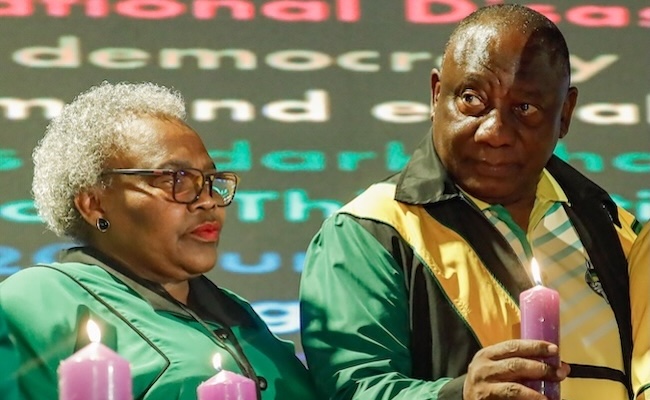
Top image collage: Idac’s Andrea Johnson. Picture: Gallo Images/Brenton Geach.
Sign up to Currency’s weekly newsletters to receive your own bulletin of weekday news and weekend treats. Register here.