
I had a sense of my Friday song group as a music community this week, as my inbox lit up time and again with messages about the passing of the last of South Africa’s real jazz legends, Abdullah Ibrahim – or as many still refer to him decades later, Dollar Brand. He’s featured today, given his vast musical contribution, his role in the cultural struggle in South Africa and particularly, in this commemoration week of the Soweto uprisings of June 16.
Ibrahim revered Thelonious Monk and played with the greats, among them Ellington, Shepp, Trane, Roach and others from the USA; and Masekela, Gwangwa, Moeketsi and Coetzee at home in South Africa. This week has been full of tributes and obituaries and although his passing leaves a remarkable musical gap, I thought that I should avoid repeating what’s been written already and try to give the Friday song a different, more personal slant this week.
While I knew Ibrahim, we were not close. He was complicated and not an easy man to know. Deeply spiritual, philosophically rooted in a world very few were privy to, staggeringly disciplined and emotionally inscrutable. My thinking about him as a pianist and composer revolves around two primary ideas: at times, someone who worked a style that was both reflective and joyfully exuberant about his homeland and at others, one with a spacious and contemplative relationship with his instrument. He could groove on one song and then on the next, tease out notes, leaving space between them in a meditative mood, waiting to capture some elusive idea towards which he would strive, whether he reached resolution or not.
Watching Ibrahim play was always a treat, whether it was two- or three-note clusters of what I called “Kaapse chords”, or emotionally lyrical ballads, or free explorations.
Complicated cat
Once, listening to a version of his ballad The Wedding, I commented to him on how I thought it was such a beautiful piece, simultaneously capturing joy and sadness. I expected him to engage, but he just looked at me and stayed silent. I felt bewildered, made to wonder how I could dare suggest some interpretation about his composition. I hoped that perhaps he agreed with me, but I never found out. On another occasion though, speaking about piano accents on the version of District Six on his big band album, Bombella, he chatted happily and appreciatively.
Another time I was approached by a journalist before a concert, wanting to do an article about Ibrahim’s return from exile. He asked if I could get an idea from the artist about the evening’s proposed set list. Ibrahim was not enamoured of the question, which intruded on his creative moment, and he snapped, “Tell him I will play just one, long improvised suite and it has no title.” And that’s what he did. Sat down and improvised, moving between freedom and beauty for an hour, without stopping and almost never hinting at a single composition that had made him so loved at home after decades away. I had learned my lesson; catch Ibrahim at the right moment or else!
I represented Ibrahim for a period. WelI, I tried. It was no easy task. When there was a buyer, Ibrahim would not sell. When there was a seller, Ibrahim would not buy. Commitment to deal-making was not a priority. There were rights issues and personal ones, which I could rarely access, and ideas that meandered but never reached an end. I remember asking a close friend of his why it was so difficult to do an easy transaction with Ibrahim, and he shrugged and said, “Maybe he will still do it” – but everything was in the “maybe”.
Ibrahim’s passing leaves me sad, because he was such a contributor and such a character. And when he smiled at you and welcomed you into his world, even for a few moments, he made you feel very special.
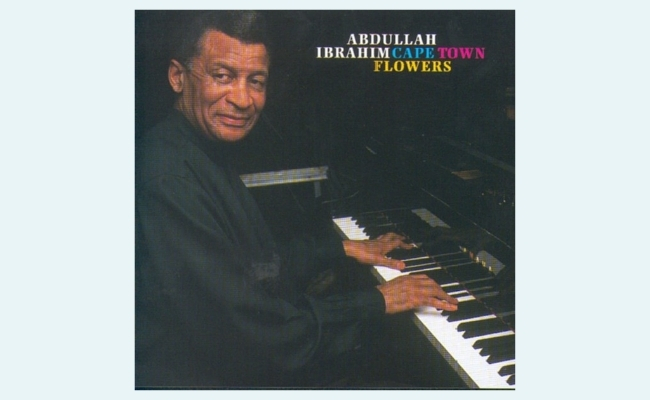
So, for today I was torn between choosing the joyful Ibrahim or the contemplative one and picked Chisa from the 1997 album Cape Town Flowers, for Spotify listeners and a different version, from African River, for those on Apple, as the former is not available on that platform.
Flowers is an album that is an excursion more into melodic ideas than songs and Chisa manages somehow to convey both the meditative and buoyant sides of Ibrahim’s playing. Rather than developing a solo, he takes the central, familiar type of motif he made his own in different directions in a trio setting, accompanied by a very gentle Marcus McLaurine on double bass and George Grey on drums.
With his band Ekaya on African River, it’s a more joyful arrangement with horns. Overall, Chisa a song of sadness, hope and love – and if you like it, perhaps it will be a catalyst for some Abdullah Ibrahim explorations.
Listen to Chisa on Spotify here and on Apple Music here.
I started a music WhatsApp group in 2023. I send one song a week on a Friday, with links to both Apple and Spotify, and an accompanying narrative/capsule piece. If you want to engage about a song, get a playlist or just get in touch, email me on markgrosin@gmail.com.
For more of Mark’s excellent picks, go here.
Top image: Currency collage
Sign up to Currency’s weekly newsletters to receive your own bulletin of weekday news and weekend treats. Register here.