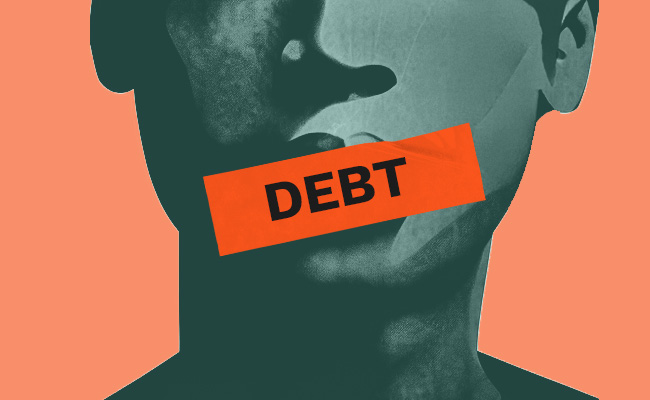

When South Africans talk about debt, we often frame it as a statement: balances, arrears, interest rates, and repayments. But anyone who has lived with financial stress for long enough knows that debt is never purely mathematical. It is emotional. It is private. It can sit on your chest like a weight, making even simple decisions feel heavier than they should. In my experience, it is often shame – more than a lack of information – that keeps people from taking the first step to tackle it.
That wider emotional burden comes through strongly in Sanlam’s 2026 Budget Truths Survey. In the study, 24% of respondents described their dominant feeling about money as stress or overwhelm because “money doesn’t stretch”. A further 10% described feeling caught in a debt or borrowing trap: a recurring cycle of earning, spending, and borrowing just to get through the month. For many people, financial pressure is not an occasional inconvenience – it is something they carry month after month.
One of the most damaging assumptions we make about debt is that it must result from carelessness or overspending. Real life is rarely that neat. Debt pressure can grow because salaries do not keep pace with rising costs. It can grow because someone is supporting children, ageing parents, or relatives in crisis. It can grow because one emergency lands in a household with no buffer left. Shame enters when people absorb all that complexity and still tell themselves they should have been able to cope on their own.
The research helps illuminate that pressure. In the same study, 13% of respondents described money strain through the lens of dependents, family responsibilities, and school costs. Another 11% pointed to broader cost-of-living anxiety and uncertainty, while 9% were primarily worried about emergencies and unexpected shocks. These are not the voices of people being casual about money. They are the voices of people trying to hold a household together while costs keep climbing and incomes do not.
Suffering in silence
What makes debt especially difficult is that it often becomes quieter as it becomes more serious. We are generally comfortable talking about financial milestones – buying a home, funding studies, and building wealth. But when money becomes tight, many people retreat. They stop asking questions. They avoid checking balances. They delay opening emails. They convince themselves that if they can just get through this month, things will somehow sort themselves out on their own.
That silence is powerful because it creates the illusion that everyone else is coping, when in fact financial strain is far more widespread than many people realise. By the National Credit Regulator’s latest count, more than 10.5-million South Africans – over one-in-three credit-active consumers – were classified as having impaired records by June 2025. Debt distress is not rare, and it is not always visible. But silence can make it feel uniquely personal.
That matters because when people believe they are alone in their struggle, self-blame deepens and action becomes harder. If there is one message South Africans need to hear more often, it is this: debt should not be faced in silence, and it should not be treated as a moral failing before the full story is understood. For some, the next step may be to request a free annual credit report from a registered credit bureau and understand exactly what is owed. For others, it may mean speaking with a registered debt counsellor and mapping out practical options. Either way, things begin to shift when people feel able to be more honest about their situation.
The first step doesn’t need to solve everything; it only needs to interrupt the silence – a single conversation, an honest look at the numbers, a decision to stop carrying the weight alone. From there, clarity and a way forward.
Afua Darko is head of business at Sanlam Credit Solutions, driving the growth of its digital platform that helps South Africans take control of their credit and financial wellbeing.
Top image: Rawpixel/Currency collage.
Sign up to Currency’s weekly newsletters to receive your own bulletin of weekday news and weekend treats. Register here.