

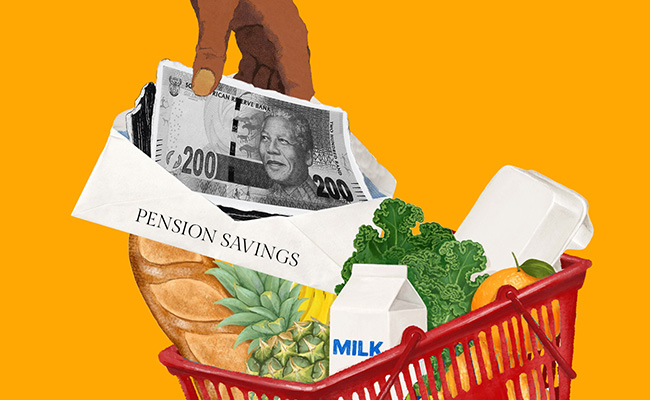

The numbers, on paper, say South African workers are doing fine. The reality says something else.
The average salary increase this year was 5.43%, according to the April 2026 Remchannel Bi-Annual Salary and Wage Movements Survey. That compares with 2025’s average inflation of 3.2%. By that arithmetic, most households should be better off.
Then look at what those workers are actually doing.
Two-pot retirement withdrawals – a system that kicked in during September 2024 to give members access to a portion of their savings in an emergency – keep climbing. By March 27, less than a month since the new tax year opened, Alexforbes had received more than 210,000 savings-pot claims, matching the volumes recorded when the system launched. Its data show 67% of members who claimed in 2025 came back in 2026, and 31% of those claimants have now withdrawn across all three tax years since the system began.
“Across age, income and gender groups, we are seeing large numbers of people accessing their savings pot primarily for basic living expenses,” Lindiwe Sebesho, MD of Remchannel and one of the authors of the report, tells Currency. “People are under enormous pressure on disposable income.”
Old Mutual Corporate’s latest withdrawal survey shows March 2026 claims returned to near inception-level volumes, with about 100,000 recorded by month-end, says Thiru Govender, principal consultant at Old Mutual Corporate Consultants. Among lower-income members, basic living needs alone accounted for 45% of withdrawals. Across all income bands, the leading reasons were essentials, emergencies and debt.
“That pattern shows how deeply financial pressure is embedded in employees’ day-to-day lives,” she says. “For employers, the question is whether pay, benefits and wider support are aligned to where employees are feeling the most strain. Two-pot withdrawal data gives employers a valuable signal of where current support may be falling short.”
The cost of living
Household debt is now close to two-thirds of disposable income, at 61.8% in the fourth quarter of 2025 – even though the cost of servicing that debt has declined thanks to five interest rate cuts totalling 150 basis points over the past 18 months.
About 90% of employers anchor their salary increases directly to headline CPI. The trouble is that for most workers, day-to-day living costs feel considerably higher than the headline figure suggests. Without clear communication from businesses about what they can afford, what is sustainable and how the increase compares with prevailing prices, even an above-inflation raise of 5.43% fails to register under cash-flow strain. Psychologically, employees feel poorer rather than better off.
Especially with all the negative news in the world right now. Brent crude has surged more than 40% since US and Israeli airstrikes against Iran at the end of February, sending domestic diesel and petrol prices to record highs. The energy shock is delaying hopes of further interest rate relief, and could put rate hikes back on the South African Reserve Bank’s table if the conflict persists.
That pressure is being compounded by a quiet restructuring of corporate safety nets. As businesses absorb their own rising operational costs, traditional workplace provisions – soft loans, cash advances, fully paid maternity leave – are being phased out or minimised in favour of performance-linked reward structures.
What companies can do
For Siyasanga Kashe, executive for member solutions at Momentum Corporate, the strain is showing up in other ways, too. Workers are cancelling insurance cover, or cutting contributions for life and income protection – the kind of decisions whose consequences arrive later, usually when something has already gone wrong.
The mental health side is showing up in Momentum’s data. Employee assistance programme utilisation is up among its clients, Kashe says, and absenteeism linked to wellbeing pressure has risen, even inside Momentum’s own offices.
“While public debate focuses on macroeconomic issues – exchange rates, oil prices, geopolitical tensions – the real impact is being felt in people’s daily lives,” she says.
There are levers companies can pull that don’t require a bigger wage bill. Employee assistance programmes, when available, offer free counselling and financial guidance. Emergency savings products can be deducted directly from payroll for as little as R50 or R100 a month, sitting alongside retirement contributions and accessible when pressure hits – without the tax hit of a two-pot withdrawal. Pension-backed home loans let workers finance a solar installation or a renovation without cashing out their fund.
“Many employees are already paying for solutions they don’t realise they can use,” Kashe tells Currency.
For employers, the consequence is showing up in churn. Labour turnover hit 17.8% this year – up from 13.5% the year before, and the highest since Covid.
Remchannel’s Sebesho puts the cost of replacing a leaver at roughly 1.5 times their annual salary. In FMCG and retail, turnover was 26.6%. In financial services, 60.2% of exits were resignations.
“Often organisations are not proactively managing the cost of turnover effectively enough,” Sebesho says.
Moving in the wrong direction
The Competition Commission’s second Cost of Living Report, published in April, puts numbers on the gap between CPI and the true cost of living. Between January 2020 and January 2026, headline inflation rose by roughly 30%. Electricity prices rose 85% over the same period. Water tariffs climbed 68%. Public primary school fees rose by 37%; secondary school fees rose by 42%. The commission found that the average South African worker now spends more than 57% of monthly earnings on transport and electricity alone.
Rentals had been one of the few line items running below inflation. That changed in the first quarter of 2026, when the commission flagged the strongest rental growth in eight years. Another non-negotiable item is moving in the wrong direction.
The report also identifies what it calls “rocket and feather” pricing – retail prices that rise quickly when producer costs rise, but barely move when those costs fall. In late 2025, producer egg prices dropped from R13.32 to R11.69. Retail prices fell from R23.84 to R23.02. For frozen chicken, producer prices stayed flat while retail prices rose from R96.38 to more than R101. The relief, when it comes, doesn’t reach the till.
The numbers in the report run through January, so they capture none of the fuel-price surge that followed the Iran strikes.
“Without deliberate attention to how essential service prices are formed and transmitted through the economy, cost pressures are likely to remain entrenched, limiting gains in household welfare and slowing broader economic recovery,” the Competition Commission’s Doris Tshepe said when the report was released.
For the workers raiding their savings pot, that is what matters most.
ALSO READ:
- Why parents raid retirement to pay school fees
- A practical guide to prioritising your money
- Earning more won’t fix your finances. This will
Top image: Rawpixel; Currency.
Sign up to Currency’s weekly newsletters to receive your own bulletin of weekday news and weekend treats. Register here.








I’m not a smart person so please forgive the stupidity of the question; if one were to boil the article down, is it saying that people *think they can’t afford things?