

South Africa’s recent storms have left farms underwater, roads damaged and export supply chains under pressure – but early indications are that the national agricultural market has not been derailed, and the country is still on track for a record grain harvest.
The damage is severe where it has landed, particularly in parts of the Western and Eastern Cape. Yet the broader story for South African agriculture in 2026 remains one of unusually strong production, record grain output and resilient export capacity.
The real worry, industry figures say, is not that the rain has destroyed the country’s food outlook this year. It is that extreme weather is now colliding with already weak logistics, damaged local infrastructure, slow disaster-response capacity and policy delays in areas such as wheat tariffs.
Wandile Sihlobo, chief economist at the Agricultural Business Chamber of South Africa, says the floods must be understood in context. “This is an excellent year for South African agriculture,” he says. “The year will still show positive growth in how agriculture performs.”
After 17.4% growth in 2025, agriculture could still expand by “somewhere between 4% and 5%” this year, he says. In grains, South Africa is having “one of the best seasons”, with a record harvest of about 20.8Mt, including 16.8Mt of maize.
The storms appear to have arrived late enough, or in localised enough areas, not to overturn the national crop picture. Sihlobo says the February and March rains in parts of Limpopo and Mpumalanga came after potatoes had largely been harvested, causing only limited damage. The later storms in the Western and Eastern Cape were more damaging but geographically concentrated.
“There is a localised challenge, the keyword [being] localised,” he says, pointing to Patensie in the Eastern Cape, the Hex River table grape region, parts of the Western Cape including Ceres, and some ostrich farming areas around Mossel Bay. In Patensie, lemon producers were reporting damage of “anywhere between 10% and 15% of their crop”, while the full scale of Western Cape losses was still being assessed.
There’s a human cost, too
Western Cape authorities have warned that the damage extends beyond crops. The provincial agriculture department says irrigation systems, access roads and bridges have been compromised, while power disruptions have affected irrigation, storage and packhouse operations. It warned that the knock-on effects could hit fruit and wine export supply chains through harvesting and transport delays.
Table grape producers appear to be among the hardest hit. The South African Table Grape Industry says producers have reported flooded vineyards, collapsed netting and poles, and damaged trellising and irrigation infrastructure, with some farms reporting that more than a third of plantings have been affected. The Hex River region has now experienced severe flooding for the third time in five years, the organisation says.
The Western Cape storms have also had a human cost. Two powerful storms swept through parts of the province, killing 11 people and leaving farms under water, with Western Cape agriculture MEC Ivan Meyer identifying the Hex River Valley, Grabouw, Elgin, Ceres and Witzenberg as high-risk agricultural zones.
South Africa’s 2026 rainfall picture is not a single national deluge but a sequence of regional shocks. Limpopo and Mpumalanga were drenched in January; parts of the interior and Northern Cape received highly unusual late-summer and autumn rainfall; the Western and Eastern Cape were then hit by damaging May storms. The flip side is that dams around the country are between 75% and 100% full, and the drought in the Eastern Cape has been lifted.
Sihlobo says South Africa should still be able to meet its export commitments, which constitute about 50% of total earnings in the sector. “At a broader scale, South Africa remains with the steady, solid performance of agriculture,” he says. “At a provincial and a commodity level, these floods have caused devastating destruction in parts of the Eastern Cape and the Western Cape. And there will be tough financial implications for those affected farmers. But we are going to be able to meet our obligations on any export markets.”
The more serious danger, he says, is the damage to infrastructure that allows agriculture to function. “The infrastructure rebuild has to be faster in the Western and Eastern Cape so that activity could resume.”
The local government nightmare
That is where the storm story becomes less about rain and more about governance.
Cape storms have “destroyed critical infrastructure, with serious implications for exports and supply lines”, the Cape Chamber of Commerce and Industry says, citing damage to roads and the difficulty of getting goods to market.
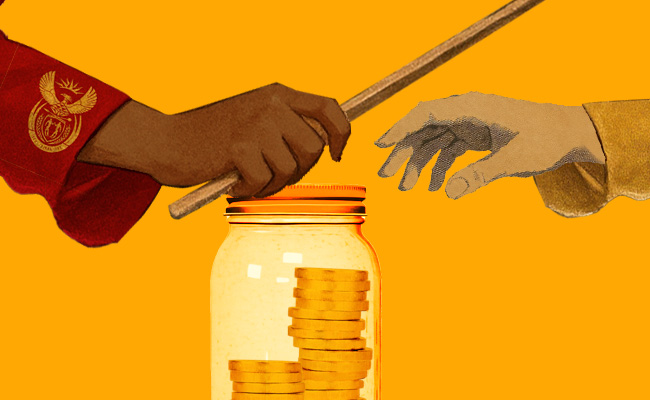
Sihlobo says Eskom might be relatively quick in repairing damaged pylons, but municipalities and local government will be critical in restoring rural roads, bridges and other farm infrastructure. The fiscal backdrop is grim. “Ordinarily, if we had our disaster fund, it’s times like this where you would intervene and cross-subsidise the farmers as they rebuild,” he says. “But unfortunately, we’ve mismanaged some of the funds and so we just don’t have any money in the kitty. That’s the reality.”
For exporters, that compounds an existing logistical problem. Sihlobo says Cape Town port efficiency has already been a major issue for table grape farmers, with some Western Cape and Northern Cape producers moving grapes to Eastern Cape ports to avoid delays. “We want to enjoy the same level of efficiency as the Eastern Cape and Durban in Cape Town,” he says. “Cape Town has been disappointing so far.”
The National Chamber of Milling has raised a parallel governance concern in wheat, where the problem is not rain but tariff administration. Executive director Boikanyo Mokgatle says delays in implementing triggered wheat tariff adjustments “continue to pose a serious threat to food security and the sustainability of South Africa’s wheat value chain”.
The variable wheat tariff formula, he says, was designed to provide “a predictable, rules-based framework” to encourage local wheat production while avoiding undue downstream price escalation. But repeated delays between the triggering of tariff adjustments and their implementation had “created unintended consequences that undermine the very purpose of the variable tariff mechanism”.
Mokgatle has called for “urgent remedial interventions” and the finalisation of an automatic tariff adjustment system under which administrative reviews would be translated into immediate implementation. His comments echo wider industry frustration: Grain SA has said the wheat tariff mechanism is one of the few tools available to protect local producers from subsidised imports, but that delays undermine its effectiveness.
The issue is current. South African Revenue Service records show that on May 15 2026, the wheat and wheaten flour duties were amended under the existing variable tariff formula, reducing the wheat duty from 61.90c/kg to 15.37c/kg and the wheaten flour duty from 92.85c/kg to 23.05c/kg.
From too much to too little
Looking ahead, the risk may shift from too much water to too little. Sihlobo says South Africa has been in a La Niña weather pattern, associated with above-normal rainfall and flood risk, but is now moving towards El Niño, which generally means below-normal rainfall or drought in Southern Africa. “If it is dry, much of the country still has better soil moisture,” he says. “But of course, if it is too intensely dry, then that would become a problem.”
That warning is supported by weather agencies. NOAA’s Climate Prediction Centre said on May 14 that El Niño is likely to emerge between May and July 2026 with an 82% probability, and continue through the northern hemisphere winter of 2026-2027 with a 96% probability. It cautioned, however, that substantial uncertainty remains about the strength of the event.
The South African Weather Service has also warned of a rapid shift towards El Niño, associated with hotter and drier conditions, strengthening into spring and the start of the next summer season, while advising caution because ENSO Forecast skill can be limited during winter.
The result is an odd agricultural picture: this year’s floods are locally devastating but not nationally decisive; next year’s possible drought may be more nationally significant. In the meantime, South African farmers are being asked to manage climate shocks, port delays, damaged roads, weak municipal capacity, slow tariff administration and rising input costs all at once. As Sihlobo puts it, the sector is facing “geopolitical risk and climate risks” simultaneously. The rain may have come late enough to spare the national harvest. The question is whether the state can move fast enough to spare the next one.
ALSO READ:
- Farmers ‘maak ’n plan’ as they adapt to Trump’s turmoil
- China’s African harvest: trade wars are reshaping the fruit bowl
- Most South African farmers are black: why Trump got it so wrong
Top image: Rawpixel; Currency.
Sign up to Currency’s weekly newsletters to receive your own bulletin of weekday news and weekend treats. Register here.