When Zanele Muholi was told they had been nominated for the Hasselblad Award – widely regarded as the most prestigious prize in photography – they kept it to themselves. Sat with it, turned it over quietly in their mind, not quite believing it was real.
The South African visual activist was announced as the 2026 Hasselblad laureate earlier in the year – only the third African to receive the honour, and the first person of Muholi’s profile to do so: black and queer.
“It brings respect and recognition that a person deserves from their own country,” Muholi says, speaking from Cape Town, their voice carrying the weight and warmth of someone who has spent more than 25 years refining their craft. “It’s beyond just an award. It’s the true meaning of what awarding means – to be seen beyond anything else.”
For Muholi, who has built a singular career documenting black queer and trans lives in South Africa and across the African continent, the award came at a moment of deep self-introspection, “reflecting on many threads of my life”, they say.
One of those threads leads to their mother, who would have turned 90 this year. She passed away in 2009. The award, Muholi says, is dedicated to her – and to all the mothers who have pushed themselves harder than anyone could know, quietly, without recognition, for their families and communities. “I never got the opportunity to celebrate Mother’s Day because my mom was at work most of the time,” says Muholi, whose mother was a domestic worker.
A visual record
To Muholi, the Hasselblad is not a career-crowning moment of arrival or resting point, but rather a time to accelerate. “You cannot relax and say: ‘I’ve got this big award, therefore I should chill,’” Muholi says, laughing a little. “I sleep less. I work hard. That’s my motto. It’s been my tune for a long time.” The logic, as Muholi explains it, is almost counterintuitive in its simplicity: the more you sleep, the more everything sleeps. The more you work, the more you stay motivated.
For someone who has been photographing for more than 25 years – who has shown at the Tate Modern in London, received an honorary doctorate from the University of Liege in Belgium, and had their work inducted into the International Photography Hall of Fame in Indianapolis – there is still no sense of completion. “There’s never enough,” Muholi says. “There are still a lot of projects to be realised. A lot of community work that I continue to do. A lot of collaborations with the youth.”
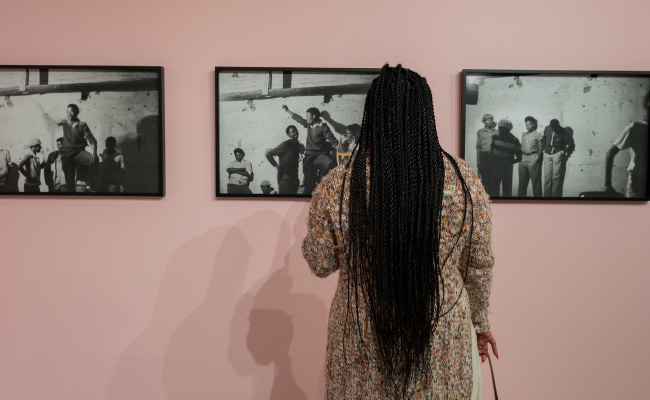
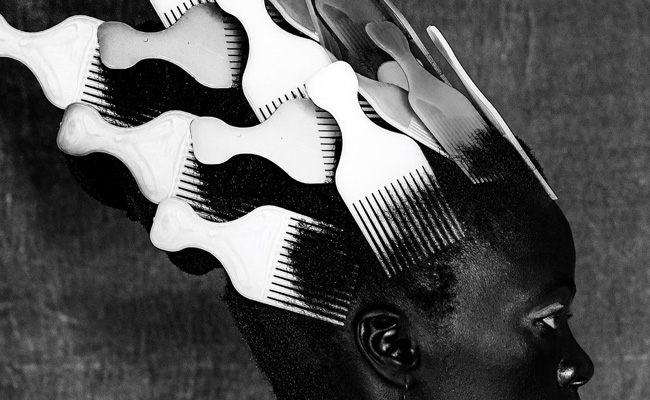
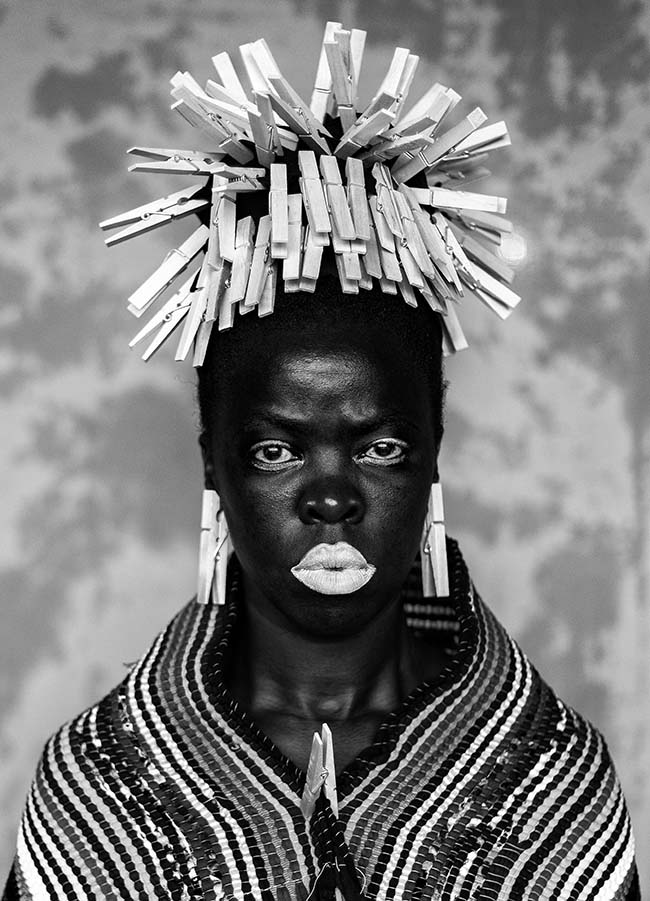
At the heart of Muholi’s practice is a decades-long commitment to creating what they describe as a black queer trans archive, a visual record of lives that have too often been silenced or rendered invisible. Their series, Faces and Phases, started in 2006, comprises hundreds of black-and-white portraits of LGBTQUIA+ individuals across South Africa and beyond. The Tate retrospective – which travelled to more than 10 venues, including Paris, Copenhagen and Iceland, before arriving in London – made it the most travelled show of its kind.
“We’ve seen a number of young artists coming out now dealing with the topic of identity and sexuality,” Muholi says. “People are able to express themselves because they have a reference point now.” That reference point, in large part, is Muholi’s own, instantly recognisable, body of work.
Lens on the learners
Away from the gallery world, Muholi’s most sustained act of visual activism may be the one least spoken about: education. For 17 years, Muholi has partnered with a school, Pakathi Secondary School, a township school in KwaZulu-Natal, supporting a class in visual arts. The teacher there, deeply dedicated, has achieved a 100% pass rate in visual arts year after year. Each year Muholi brings the learners to Cape Town, takes them to the Cape Town Investec Art Fair and gives them their first flight, their first hotel stay. “They become the first person in their families, maybe, to be on an airplane,” Muholi says. “I am there. I was them – that student who longed for someone to take me to the spaces we were only reading about in books.”
Beyond the school partnership, Muholi runs the Muholi Art Institute (MAI), offering free photography training to youth in rural towns around Cape Town and beyond. And in the early mornings – 4am or 5am – she runs mentorship sessions for young black men who want to be photographers or artists.
“If we don’t save these young men, if we don’t support them, somebody might end up in trouble,” Muholi says. “We would be saving ourselves.”
Muholi talks about 20 years of queer sports activism, and a group of young lesbians who represented South Africa at the Gay Games two decades ago. This year the games are being held in Valencia, Spain, from June 25 to July 6, and MAI will be there to document the event. There are coffee table books to be made – of women in sport, women in agriculture, women in hospitality. “We sleep at hotels. There are people serving us with a smile .They’re never written about anywhere,” Muholi says. “We need to make sure those women are seen.”
A moment of recognition
Of course, there’s also a personal dimension to Muholi’s photography that they speak of with candour, particularly apropos the way photography has saved them – not metaphorically, but in the most literal sense.
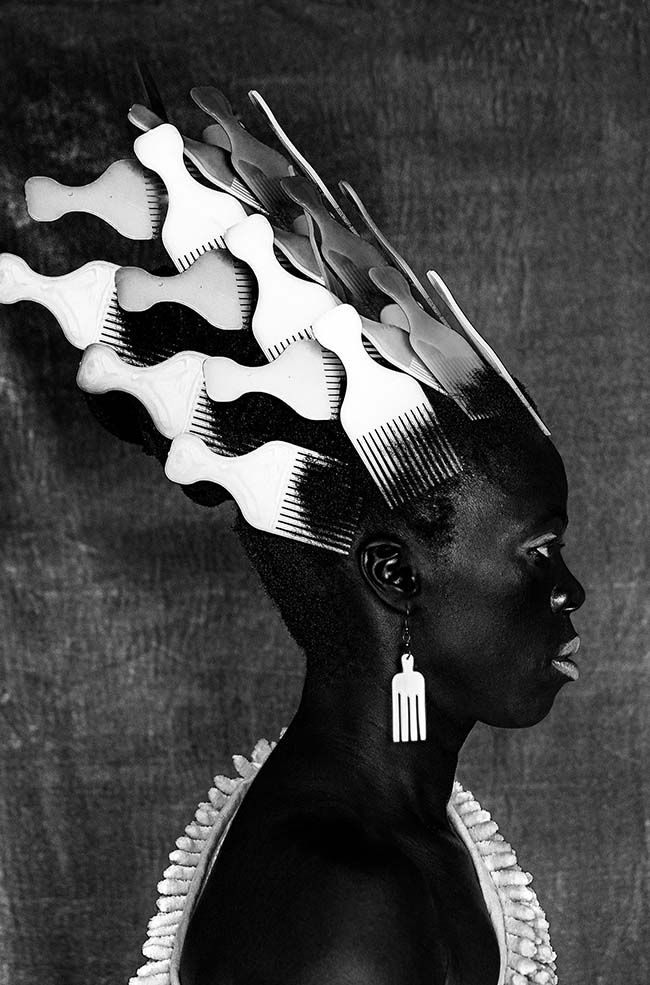
“When I thought there was nothing going on, the more I photographed, the more I felt like something was being lifted off my shoulders,” they say. “Each time I photographed myself, I felt like I had been in conversation with myself. Whatever I could not speak about, it’s in the picture.”
Art, Muholi says, is an act of healing for communities as much as for individuals – especially communities carrying the accumulated weight of traumatic pasts. “We come from traumatic pasts as a country. There’s a lot going on. And healing becomes that need.”
The camera, in this framing, is not a passive instrument. It is a confrontation, a witness, a weapon against silence. “I’m fighting with a camera,” Muholi says. “There’s this thing that penetrates my soul and says: there’s no other person that can deal with you at this moment. It’s you and I. Just us. Love yourself.”
The Hasselblad Award, then, is a moment of recognition before the next chapter of work. “The award is not mine alone,” Muholi says. “We are awarded as a community. As a queer trans community. As black communities who never had many opportunities.
“It’s big, it’s massive. I don’t even have the best articulation for it. But it’s big.”
ALSO READ:
- We review: ‘Ernest Cole: Lost and Found’
- Sanell Aggenbach’s beautiful, unsettling take on a fractured world
- Beyond photography: Standard Bank Art Lab honours Santu Mofokeng
All images: Zanele Muholi/supplied.
Sign up to Currency’s weekly newsletters to receive your own bulletin of weekday news and weekend treats. Register here.