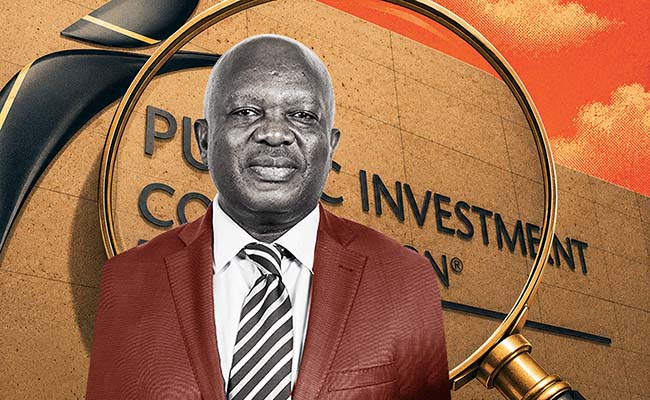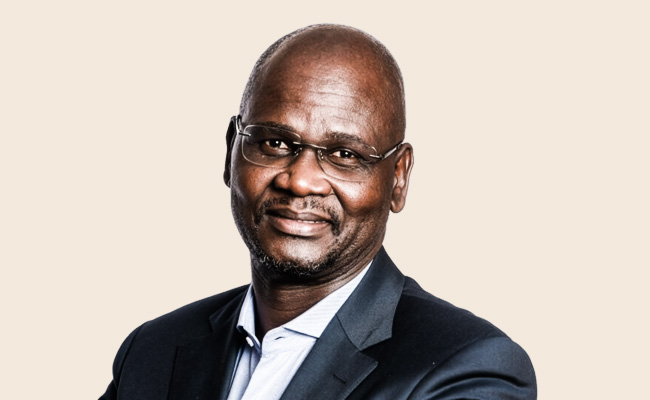


Patrick Dlamini has won his case to return to work as the CEO of the country’s largest asset manager, after the high court in Pretoria ruled that the board of the Public Investment Corporation (PIC) had no right to suspend him last month.
This ends a torrid few weeks for Dlamini, who was put on ice over a controversial whistleblower report that had accused him of trying to “centralise power” by bypassing the board, “intervening in investment decisions” and “invoking political protection”.
This impasse also led to a political standoff between finance minister Enoch Godongwana, who had supported Dlamini, and his deputy David Masondo, who chaired the board that suspended him. In the fallout, Masondo and his entire board resigned.
This is probably just as well, after Tuesday’s court judgment. Judge Mandla Mbongwe rejected the application by two individuals to intervene, and found that Dlamini’s suspension was “unlawful”.
Mbongwe said the PIC Act stipulated that a CEO’s suspension has to be initiated by the human resources committee, and approved by the finance minister in consultation with the cabinet.
“None of these prerequisites were met. The board acted unilaterally, without ministerial approval, and in disregard of its own policies,” he said.
While Public Interest South Africa, one of the bodies that tried to intervene, had tried to argue that the authority to suspend someone stemmed from the PIC’s whistleblower policy, the judge disagreed.
“Whistleblower protections safeguard whistleblowers from retaliation. They do not, however, confer powers of suspension on the board,” he said. “The board’s reliance on whistleblower principles cannot cure its lack of authority.”
Speaking to the FM in the wake of the ruling, Dlamini said he will wait until after the PIC’s board meeting on Thursday for guidance on when he should return to the office.
He describes this period as very difficult. “Support from family becomes very important, as does belief. You know, the calls I got from people – even PIC employees – saying, ‘We are praying for you. We believe in you.’ That meant a lot.”
In a statement on Tuesday evening, Godongwana said that the judgement “vindicates the actions taken by National Treasury and the Cabinet
to restore governance at South African’s largest asset management institution. These actions were both good and necessary, triggered in part by the hasty removal of Mr. Dlamini without due consultation and
process.”
Past baggage
Dlamini’s return in the next few days will at least provide a veneer of stability to an organisation that has had five of the top six executive positions filled by people in acting positions.
The new board, appointed by Godongwana on Thursday, will need to move quickly to fill these posts, as well as appoint people to head up the three critical operational portfolios at the institution: the head of listed investments, head of fixed income and head of unlisted investments.
This might not come without some political pushback, after the DA flagged last week that it was unhappy with the choice of PIC chair, Sehai Mohai, due to awkward baggage from his time as the MEC for finance in the Free State.
A DA task team uncovered a declaration that Mohai had made to parliament in 2020, in which he admitted to holding 100% of a company called Moyakhe Trading. Moyakhe, as it happens, is the company that journalist Pieter-Louis Myburgh wrote about in his book Gangster State which scored an R18m housing contract from then Free State premier Ace Magashule’s government.
Mohai, responding to questions from the FM, said Moyakhe is actually owned by his wife, who has been the sole director of the company since its inception in March 2006. “I have no ownership interest in, nor do I derive any direct financial benefit from [the company],” he said. “My disclosures were made precisely to ensure complete transparency and to avoid any perception that relevant interests had not been declared.”
While this nonetheless means that his wife secured a housing contract with the government for which Mohai was the finance MEC, Mohai said this had “no connection whatsoever with the Public Investment Corporation or with my responsibilities as chair.”
He said the housing contracts in question “relate to work undertaken in the Free State many years ago”.
But Mark Burke, the DA’s spokesperson on finance, says this nonetheless creates concern, given the fact that the PIC has been battered by allegations of cronyism and political infighting over the past decade.
“How are we supposed to trust that the new chairperson will clean up an organisation that seems to confuse investment with patronage when his own history in this regard is deeply questionable,” Burke says. “The new chair seems worse than the departed. This is why we need an apolitical head of the PIC, not yet another ANC cadre.”
Two weeks ago, Burke proposed the Pension Protection Bill to parliament’s legal services arm, which would mandate that the PIC’s chair would have to be apolitical. “No person holding a political office or having held a political office in the three years preceding their appointment will be permitted to serve as a director,” he says.
ALSO READ:
- New PIC chair under scrutiny over wife’s R18m housing deal
- Dlamini hits out at ‘bad faith’ PIC whistleblowers
- How to build a PIC dream board
Top image: PIC CEO Patrick Dlamini: Picture: supplied.
Sign up to Currency’s weekly newsletters to receive your own bulletin of weekday news and weekend treats. Register here.