

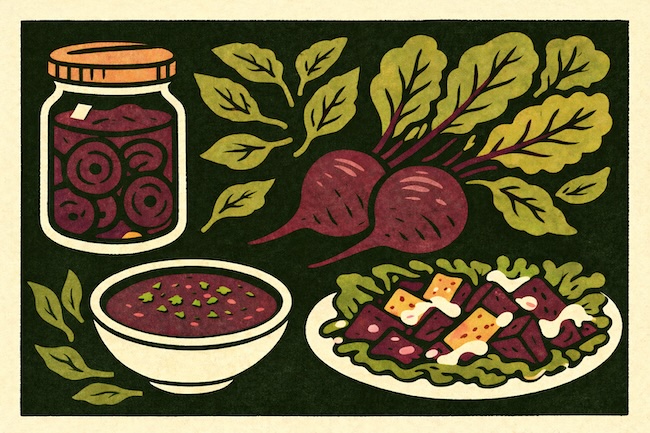

It is difficult to pick up a beetroot without thinking of Manto Tshabalala-Msimang. By insisting that this innocent root vegetable – flanked by garlic and olive oil – was a substitute for antiretrovirals, she and the rest of the government at the time helped turn quackery into policy and policy into catastrophe, handing death sentences to nearly half a million South Africans with HIV/AIDS. It is only right to pause to consider this sad and shameful chapter before we grate or roast or boil this sweet, earthy root for our loved ones.
It is true that beetroot contains nearly all the vitamins and minerals a body could require. It supports heart health, bone formation and brain function, can lower blood pressure, improve athletic performance and fight inflammation, but it can also make some damned fine food. I mean, can we talk about the delicious crisps they make?! Or the sneaky loamy quality beetroot can impart to chocolate brownies? And what about the unhinged lurid shade of pink it blushes when it is introduced to sour cream or yogurt or coconut milk?
Gorgeous geosmin
But before we get to that, the dazzling surprise for the day is that the very molecule found in beetroot requiring me to use the adjective “earthy” is called geosmin. It is this molecule we all wish we could bottle to become gazillionaires; geosmin is responsible for the incomparable, transporting scent of petrichor (from petros, which means stone, plus ichor, which flows in the veins of the Greek gods).
Yes, the way the world smells after it rains when the earth is dry is thanks to this fragrant sesquiterpenoid. Unsurprisingly, mosquitos also love the scent of geosmin, and researchers are trying to figure out a way to trap them by using beetroot peels.
Beetroot made well-known love traps in Ancient Rome, too. They were featured in the frescos on the walls of the brothels in Pompeii and Herculaneum. And in the 19th century, a freshly cut beetroot tinted flirty cheeks and lips. But while the nitrates in beetroot juice convert to nitric oxide, which helps blood flow to erections, take a calming step away from the idea of a vegetarian Viagra.
That said, we know that the stomach bone is directly connected to the heart bone, so here are some of my favourite ways to prepare beets to entice your sweetheart:
An Indian meal is enhanced by koshimbir, which mixes together grated cooked beetroot, yogurt and tempered spices, curry leaves and chilies topped with coriander. Beetroot make excellent fried bhajis and can be folded into lentils for dahl, stirred into a cooling raita, or rolled into chapatis if you like your flatbread in high heels and lipstick.
If your spread nods at the Middle East, include kubba hamuth, an Assyrian/Iraqi meatball stew in a vivid, lemony beetroot broth, or a salad with labneh and sumac, or add shredded beetroot to your falafels. One of the earliest recipes ever translated from the cuneiform is tuh’u, from ancient Mesopotamia, which describes a lamb stew made with leeks and shallots, spices, beetroot and sesame oil.
Bad jokes and beetroot soup
One of the countless bad jokes I love describes beets as “goth turnips”. Well, those fuchsia turnips offered at the schwarma-filling station are just turnips pickled with beetroots and omg, hard-boiled eggs pickled with beetroots make the most dramatic stuffed eggs, prompting another (and last, I promise) bad joke: beetroot is what happens when a vegetable studies theatre.
When the flames on the braai are licking a steak and I have beetroots in the house, I invariably make Serious Eats’ roasted beet salad with horseradish crème fraiche. It has that perfect combination of sweetness, bite and crunch that makes you feel briefly as though you have your life together.
And a lovely lunch to make for any ladies who have time to do so is dill-cured trout with beetroot and potato cakes and fresh horseradish.
We can’t write of beetroot without mentioning borscht – there are probably as many versions as there are of ragu in Bologna, each sworn by its maker to be the only one worth knowing. I serve a lovely cold soup made with beets. This version came to me from a former foreign correspondent in Poland and is called chłodnik litewski, which he attested is “glimmering pinkly on tables in unfashionable restaurants around Poland and Lithuania every summer”.
Looking at it now makes me glad we’ve established that beets are good for our hearts in that for two cups of sliced beetroot, we add a litre and a half of buttermilk or kefir and another 500g of sour cream plus dill and pickle-y ingredients. Avert your gaze, cardiologists.
The best name by far for another Baltic staple dish is “herring under a fur coat”, or more prosaically, shuba. Serve it ideally in a straight-sided glass bowl so you can admire the garish layers of diced and stacked components that smack of Soviet-era “restraint”.
Down under it is apparently traditional to eat your burger with a slice of pickled beetroot on it. Not to be outdone by American excess, the Australians often ask for “the lot” and in exchange, receive the beef patty smothered under said beetroot, grilled pineapple, fried egg, bacon, cheddar cheese, lettuce, tomato, onions. It’s less a burger than a dare.
Beetroot’s hint of “garden shed”, as we have seen, suits the salty and the sour – and goat’s cheese provides both. Try a risotto with beetroot and the usual Parmigianino Reggiano, but crumble bits of a stinging cheese of goat on top to serve.
We will end off with the reason I decided to write about beetroot this month, because just the idea of the combination of tastes in this recipe made my brain wet its pants. In the cookbook Moro East, by Sam and Sam Clark (not a typo), they dress 500g of roasted beetroot with the following green sauce: a handful of mixed fresh mint and parsley, 2 Tbs drained baby capers, ½ finely chopped shallot, 1 minced clove of garlic, six finely chopped anchovies (the way to my own heart), ½ tsp Dijon mustard, 4 Tbs olive oil, the juice of half a lemon, and salt and pepper. Smash them all together in a mortar and pestle, or you can use a blending power tool of whatever sort you possess. Unexpected, indecently good and exactly the sort of treatment beetroot deserves.
For more food lore and recipes from The Rural Cook, click here.
Top image: Rawpixel/Currency collage.
Sign up to Currency’s weekly newsletters to receive your own bulletin of weekday news and weekend treats. Register here.






Fabulous profile of this characterful root!!
There’s no root like beetroot. It does have a hint of ‘garden shed’, as you say.