
If I were to be diagnosed with synaesthesia, the word “autumn” would smell like apples. Every year as a child we’d venture out into the country to find our favourite perfumed apple stalls, carting home some of the dozens of heritage apples by the bushel.
Supermarkets have them year-round now, but only from mid-March do the varieties on the shelves, and the tastes and textures in our mouths, multiply. Of the 7,500 known apple varieties, only eight or nine are currently grown in South Africa – about 40% for the export market – with at least three experimental apples (Opal, Kissabe and Sassy) under new cultivation programmes.
Originating on the slopes of the Tian Shan mountain range between China and Kazakhstan 40-million years ago from a rose, more than half of the wild apple species are still found in China, which produces as many cultivated apples as the rest of the world combined. The apple, a pome, is characterised by the expansion of tissue grown from the base of its flower, and all these years and genetic changes later (an apple’s genome has twice as many genes as a human), it still resembles a rose hip.
Apples through the ages
Fast-forward and we see apples in the spotlight through the ages. In the Judgement of Paris, the Golden Apple of Discord helped ignite the Trojan War when Paris awarded it to the goddess he deemed most beautiful (Aphrodite), who promised him Helen’s love. Both Greek and Nordic myth imbued the apple with properties that granted eternal youth. If only. The Bible links the apple to knowledge and temptation; the Iroquois referred to it as falling from the Tree of Life.
Culturally we can be the apple of someone’s eye, a rotten apple, spend time in the Big Apple and by eating an apple a day, we can keep the doctor away. As if they still make house calls.
If you’ve ever wondered about an old English Christmas carol in which the lyrics have the choristers mysteriously come “a-wassailing”, it’s rooted in a tradition involving singing, making noise, and toasting apple trees in orchards to drive away evil spirits and ensure a good harvest.
In America, bobbing for apples at Halloween, which tormented and chilled many a child on their knees while their hands were tied behind their backs with a ribbon, in a contest to bite into one of many apples spinning away mockingly in a tub of water, had its roots in divination, where the apples held secrets of love and the future. Similarly, young European “maidens” would sleep with the peel of an apple they’d trimmed off in one unbroken spiral under their pillows and dream of their future spouse.
Of Newton, Granny Smith and other apple lore
Speaking of husbands, mine was disappointed to hear that I would not be including the apocryphal story of William Tell in this piece, who was meant to have pierced an apple balancing on his son’s head with an arrow. His response? But he was Switzerland’s only hero! I calmly countered with “Heidi”.
Granny Smith was a real person; grafting remains the only efficient way by which any apple variety is kept beyond the lifetime of the first tree; and after Isaac Newton wondered why the apple always fell perpendicularly to the ground, a storm uprooted his tree. A fragment of its wood with Newton’s initials inscribed in it went into space on a NASA shuttle mission when astronaut Piers Sellers said: “I’ll take it up and let it float around for a bit, which will confuse Isaac.”
Because this is ostensibly a business publication, we turn quickly to two famous apples associated with the Beatles’ record label and the laptop on which I type. I promise; there will be recipes.
When two apples went to court
Once upon a time there was a lawsuit over trademark infringement. It’s a long story but suffice to say that there were three separate cases. The first was settled with the computer company agreeing not to enter the music business and the record label agreeing not to enter the computer business. Five years later, the computer company added a sonic chip in an update and the label sued again. The computer guys paid out and agreed not to distribute physical music material (it was the 80s).
At the time (and this is great), while the second suit was going on, a guy at the computer company was being annoyed by the sound the computer made when it crashed, so he created the C-major chord we hear today at start-up and called it “Chimes”. The legal department worried that sounded too musical, so he renamed it “Sosumi” (pronounced “so sue me”).
The third lawsuit was more boring, but it did evoke the “moron in a hurry” legal test, so I mention it. Anyway, the Beatles’ label was inspired by the Belgian surrealist painter René Magritte, and Steve Jobs decided on “Apple” after he returned from picking McIntosh apples on an Oregon Farm because he thought it sounded “fun, spirited, and not intimidating”. For almost the same reason, Paul McCartney was captivated by Magritte’s humour and ordinariness. Lovely that two such iconic brands shepherded by two such iconic people bestowed together a similar new symbolism on the apple.
Now. To the apples we can eat.
Apples in the kitchen
The prize for the most bizarre recipe I stumbled across goes to poet Alexander Pushkin, who loved pickled apples; the recipe requires layering them alternately in blackcurrant, mint and cherry leaves during fermentation.
I also found it odd that with China producing so many varieties and quantity of apples, recipes (at least from a search in English) were limited to battered and fried toffee apples, and various apple soups used in Chinese medicine, like Apple and Snow Fungus Soup (a beauty soup).
Arabic countries, on the other hand, yielded apple parcels in filo dough, stuffed baked apples, apple ma’amoul biscuits and semolina cakes. These desserts are frequently redolent with orange blossom or rose water, or served with yogurt.
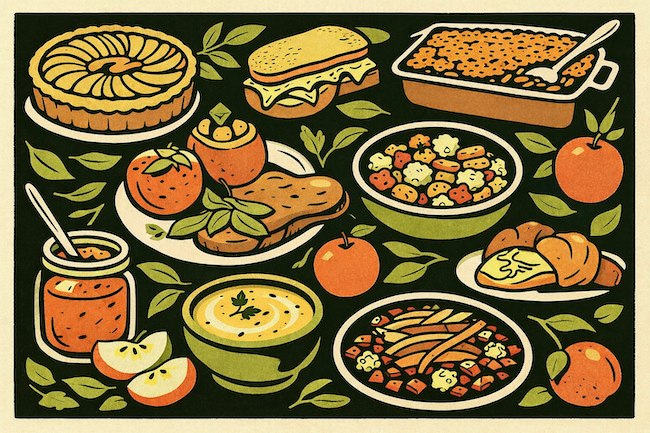
Sweet dishes using apples are endless and internationally spread, and range from crepes and pancakes, soufflés, apple-raisin cinnamon buns, turnovers, cream puffs, strudels and tarts, to good old apple pie and apple crisp. I give you a tip for the former and a recipe for the latter. Add 1 Tbs of vodka to your pie dough. It will make it much easier to roll out and handle, but the alcohol will evaporate when it bakes and leave the crust nice and flaky.
A crisp worth making
The apple crisp I’ve been making for years and years is credited to someone called Marialisa Calta:
- 5-6 generous cups of tart apples, peeled, cored and sliced
- 1 Tbs fresh lemon juice
- 1 tsp ground cinnamon, mixed with 1 tsp sugar
- 1 cup/220g muscovado sugar, packed
- ¾ cup/94g flour
- ½ cup/113g unsalted butter
- ¼ tsp salt
Preheat the oven to 180° with the rack in the middle. Butter a loaf pan.
In a large bowl toss the apple slices with the lemon juice, cinnamon and sugar. Cut together the brown sugar, flour, butter and salt. Work quickly so the butter doesn’t start to melt.
Put the apple slices in the loaf pan, press the topping over them. Bake for 1 hour. Reach for your largest spoon, or ladle, after it’s cool enough to taste.
Apples with cheese, pork and other delicious things
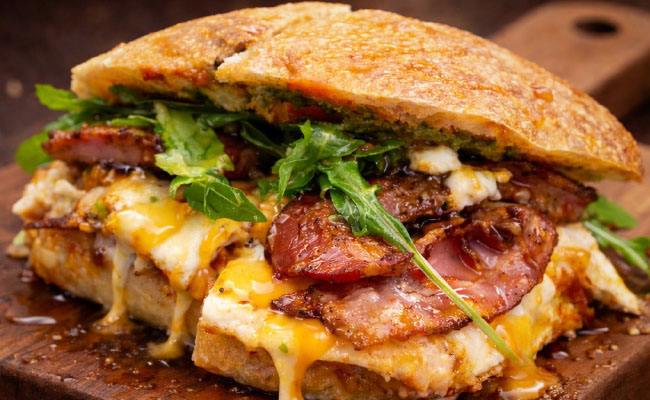
Sharp, hard cheese, usually cheddar, combines with apple pie in the UK’s Yorkshire and the US’s Wisconsin (where it was once against the law to skip the cheese and which persists in having a fan base for its state football team known as the cheeseheads). You can eat it on the side or slip the cheese under the top crust before you bake it. Robert de Niro’s most memorable food scene saw him ordering an apple pie with melted cheese in a diner as he took time out from his psychopathy in Taxi Driver.
Before we get to the savoury recipes, which often leverage the fruit’s tartness to balance rich meats, cheeses and root vegetables, permit me one last brief digression.
How’d ya like them apples?
I fell in love with various charts and rankings depicting not just the best uses for different apples, or global production, or the tart-sweet continuum, but especially one highly opinionated group of tasters, who came up with four “tiers” of rankings, from The Fabled Immaculate Apple to Criminal Malfeasance, and described fruits like the Kanzi apple as the European Party Apple; the Lucy Glo as the Breath-taking Circus Freak; Jonagold was the Forgettable College Friend; and – couldn’t agree more – the Red Delicious was referred to as Coffee Grounds in a Leather Glove.
Once again, like pigs and figs, pork and apples understand teamwork. Think sausage-stuffed baked apples; pork chops or fillet with caramelised apples and onions; pork, apple and sage meatballs; or Italian fennel sausages with caramelised onions, apple and fennel.
Both celeriac and butternut soups are enhanced by apples, and Simon Hopkinson recalls a cold curried apple soup which he remarked was “very 80s” and very delicious.
Apples can be indispensable in a lot of salads, like the classic Waldorf. When you can’t find green mangos or papayas, use a tart apple in Thai salads. They brighten coleslaw, and you will be sure that apples tossed with rocket, toasted pecans or walnuts, blue cheese and a garlicky vinaigrette are on a weekly rotation.
A final apple (and anchovies, of course)
For snacking, my mother and I used to eat apple slices smeared with peanut butter, while my father and I shared toasted, dark pumpernickel with cream cheese and apple butter. If you want to get fancy, a friend butterflies an almond croissant, spreads one side with cream cheese and the other with apple puree or apple butter, folds the wings and insists on moaning every time like she’s auditioning for Fifty Shades.
Just in case there are any avid readers of this column, we could perhaps run a betting pool as to whether or not I will slip in anchovies no matter what the key ingredient. Today, the answer, if you thought “surely not”, is that you lose. Larousse Gastronomique lists the following gem: anchovy salad à la suédoise. Cut anchovy fillets into thin strips. Arrange them on a layer of finely diced apples and cooked beetroot seasoned with vinaigrette. Garnish with parsley sprigs and with the yolks and whites of hard-boiled eggs, chopped separately. Moisten with more vinaigrette.
And after all this, remember: what is green, has four legs, is furry and if it falls out of an apple tree, will kill you?
A pool table.
ALSO READ:
Sign up to Currency’s weekly newsletters to receive your own bulletin of weekday news and weekend treats. Register here.