
AI is everywhere – from our homes and phones to our workflows. Its presence is felt across financial markets as AI-driven industries increasingly shape daily life. AI chipmaker Nvidia’s shares have had a historic run over the past year, alongside industry heavyweights such as the Taiwan Semiconductor Manufacturing Company, which builds the essential hardware powering the AI boom. It seems that anything remotely related to AI is thriving at the moment, despite a brief slowdown last week.
Investors want in and have been piling capital into the sector, especially as investment platforms make it easier to access tokenised versions of these assets in local currencies. But financial markets always have winners and losers. When money flows into one sector, it is often diverted from another.
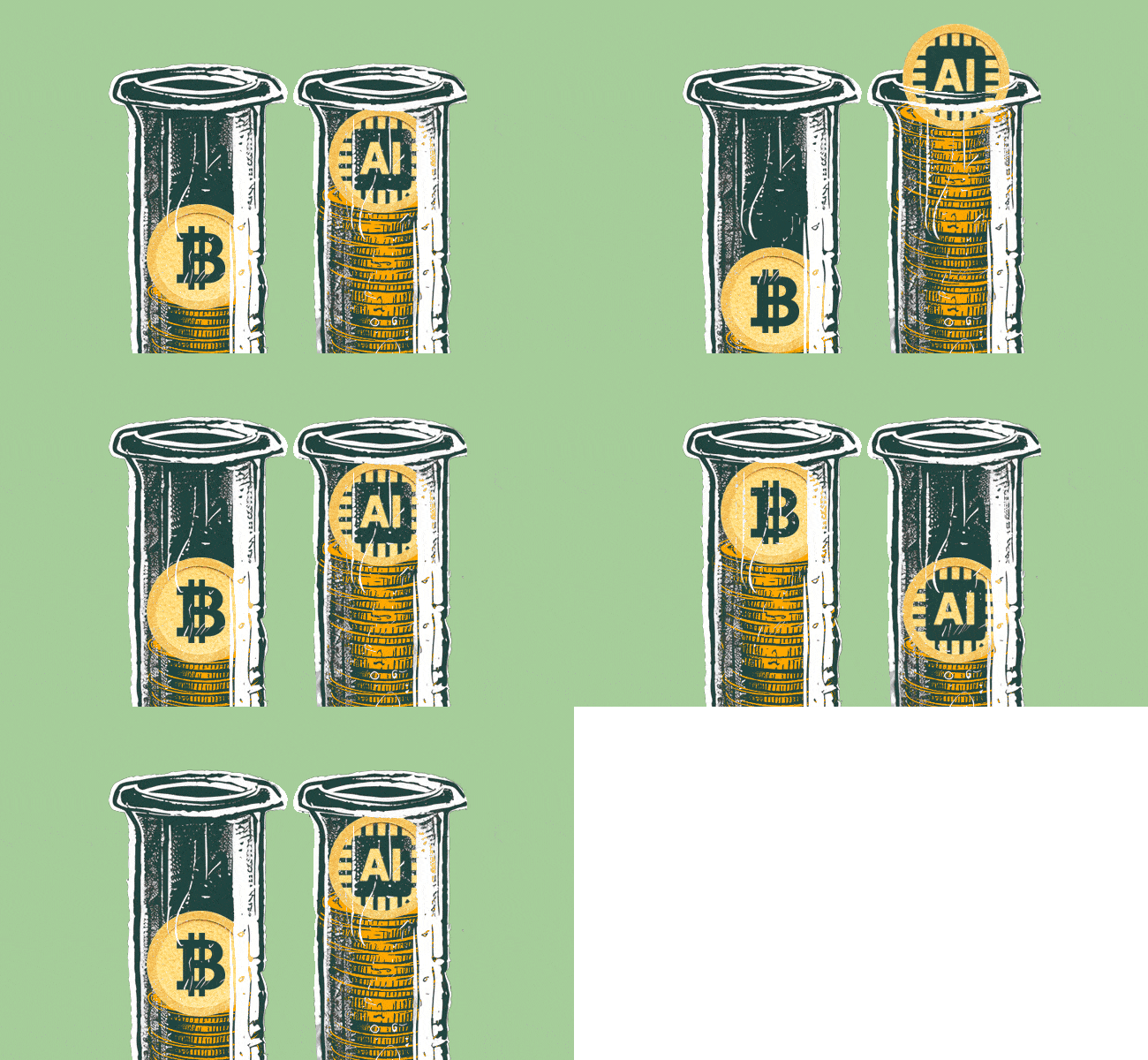
Consequently, analysts note that cryptocurrency is one of the primary streams being drained as investors scramble for exposure to the latest growth themes. This includes everything from Nvidia to the current IPO mania surrounding SpaceX, with Anthropic (Claude) and OpenAI (ChatGPT) expected to follow with their public listings soon.
On the other side of it, bitcoin ETFs have recorded significant outflows this year as many investors rotate into AI-related stocks and opportunities instead. In the first quarter of 2026, AI companies attracted about $242bn in funding, a remarkable share of global venture capital.
Canary in the coal mine
It is not hard to understand why. For many investors, progress in the AI sector (perceived or real) feels more tangible than crypto’s longer-term promises, especially as bitcoin’s safe-haven narrative comes into question. But it’s necessarily a binary equation. History shows that capital routinely rotates between high-conviction themes, and many investors participate in both.
It just so happens that while AI is swallowing capital, crypto markets are once again acting as the canary in the coal mine. Crypto markets are bending under pressure from macroeconomic headwinds, including surging interest rates, the unresolved US-Iran conflict, continuing oil-flow disruptions in the Strait of Hormuz and an increasingly hawkish Federal Reserve that seems intent on raising rates throughout the year. Meanwhile, broader stock markets have seemed largely oblivious to these risks, pausing only to catch their breath over the past week or two.
Analysts are raising several critical questions: is the AI hype a bubble? What happens when it bursts? Where will the capital flow once the liquidity spigots are turned off? There are no clear answers yet, only a strong case for diversification and not betting the house on any single investment, despite the hype.
Christo de Wit is country manager for Luno South Africa.
This story first appeared in the Financial Mail. Currency and the Financial Mail are part of the Financial Mail Group.
ALSO READ:
- The big split: why gold is acting like a reserve asset and bitcoin isn’t
- The AI bubble that isn’t quite a bubble yet
- Are today’s ‘safest’ equity bets tomorrow’s risks?
Top image collage: Rawpixel; Currency.
Sign up to Currency’s weekly newsletters to receive your own bulletin of weekday news and weekend treats. Register here.