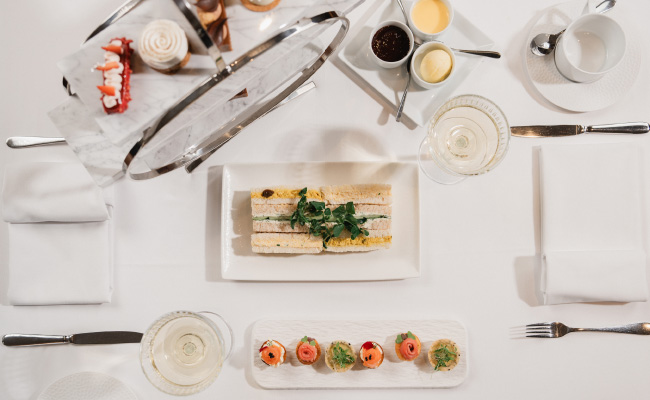

Your mom’s birthday, a kitchen tea, a special weekend afternoon splurge or a re-enactment of Downton Abbey – cue a tiered display piled with daintily cut cucumber sandwiches, petit fours and a delightful cup of Earl Grey. High tea has become a seriously popular option for South Africans celebrating, and it turns out to be one of the more lucrative rituals in luxury hospitality across the globe.
Its appeal to hotels is as much financial as it is nostalgic. The economics are simple: scones, finger sandwiches and loose-leaf tea cost far less to produce than a full restaurant meal, yet the ritual has evolved into something of an art form in its own right. In London, fancy hotels make a mint from the concept. The Savoy charges £90 for its afternoon tea, The Langham £85 – with pricier tiered options – and The Dorchester between £95 and £110. Once drinks and champagne add-ons are factored in, the actual spend per head runs higher still. The result is a margin that can rival fine dining, without the staffing demands of dinner service.
Then, tea service fills the dead zone between lunch and dinner, when restaurants and lounges typically sit empty, effectively creating an additional daily seating out of otherwise idle hours. And it sells more than food: tiered stands, bone china, live music and skyline or garden views let hotels charge for atmosphere as much as calories. It’s why high tea has become a default choice for repeat, celebration-based bookings.
The photogenic potential of these high-margin eating excursions doesn’t hurt either. The highly Instagrammable food and surrounds give hotels a steady stream of organic social-media marketing, while seasonal collaborations with chocolatiers, fashion houses and even film studios keep the offering feeling current.
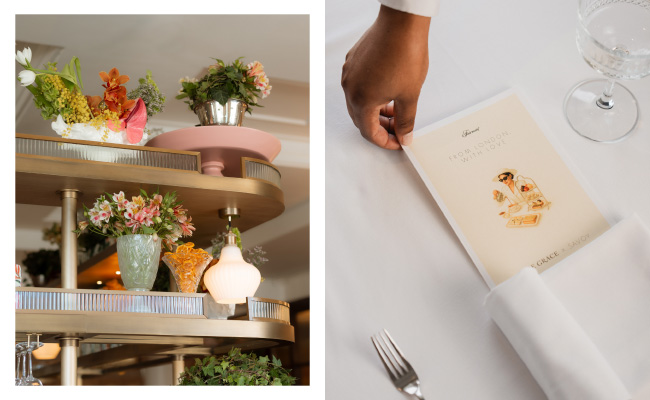
One clever twist on this traditional teatime is the cross-hotel, cross-border partnership. Enter an idea recently hatched by Cape Grace in Cape Town and The Savoy, one of London’s most iconic hotels. It’s high tea on tour, if you will, christened “From London, With Love”.
Afternoon tea has been part of the grand old Savoy’s identity for much of its 137-year history, so the hotel knows a thing or two about the concept. To link up with its Mother City counterpart, a couple of members of the hotel’s pastry team travelled to the Cape Grace, offering a glimpse of both the exacting standards behind the London service and what changes when it is transplanted somewhere new.
Among The Savoy’s signature dishes is pêche melba, the classic dessert of poached peaches and vanilla ice cream topped with raspberry sauce and, sometimes, flaked almonds. It was created at The Savoy by Auguste Escoffier, and the story goes that it was invented on the fly for guests requesting something special. It has been reinterpreted at the hotel ever since.
As part of the Cape collaboration, guests can expect an adapted version of the dessert using citrus and apple to reflect the region’s winter produce, alongside a lemon-and-lime cake, tiramisu, an apple-and-vanilla tart and scones. The savoury selection ranges from long-standing classics such as coronation chicken, to more contemporary additions, including grass-fed beef with peppadew cream cheese on spinach bread.
Then there are the views, taking in the marina, the shimmering water and Table Mountain as the backdrop to it all. It’s not The Strand in summer but, we’d argue, it’s stiff competition.
Crossing over
Mariana Agnelli Panzetti, chef de partie at The Savoy, was in Cape Town for the first part of the collaboration, and explains where the experiences align at the two properties, both managed by Fairmont, and where they differ.
The sandwich course, she says, is deliberately kept close to its classic flavours; it is in the desserts and service that there is more room for creativity. But the standard at both hotels is uncompromising: every pastry and sandwich is built to be eaten in no more than two or three bites, delicate by design, and nothing leaves the kitchen unless it meets the mark.
“If a cake isn’t perfect, it doesn’t get served,” Panzetti says.
Despite shifting food trends, the format has stayed remarkably constant. Guests still expect the classic finger sandwiches and traditional structure, even as the pastry kitchen embraces seasonal creativity.
“Your eyes should devour first,” Panzetti says. “Then, when you taste it, it should match what you’ve seen.”
For her, part of what defines The Savoy’s afternoon tea goes beyond the food.
“The service stands out – how guests are greeted, how they’re seated, how they’re looked after throughout the experience without it ever feeling intrusive. That’s very Savoy.”
“People come to celebrate, or simply to enjoy teatime,” adds Panzetti, who has worked at the London hotel for almost five years. “It’s a real tradition.”
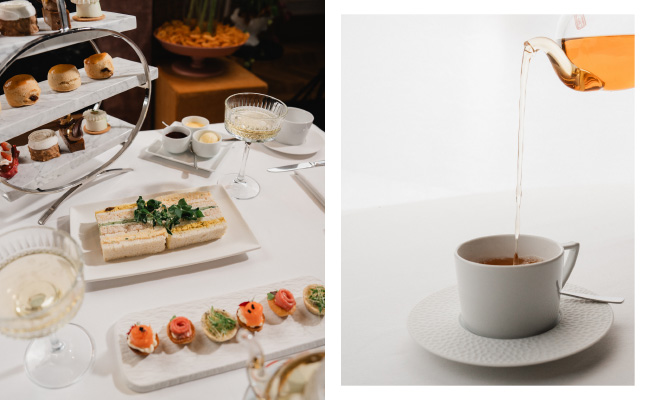
The clearest distinction between the two hotels is pace. At The Savoy, sittings are strictly capped at an hour and 45 minutes to allow for up to three services a day – a necessity given the volume, with as many as 300 guests over a weekend and about 150 on weekdays, rising further towards year-end.
It is a service that demands tact. Guests know about the time limit going in, but telling someone their sitting has ended still requires a gentle touch.
At Cape Grace, that pressure is less intense. Guests are free to linger over tea at their own pace rather than the clock’s – something Panzetti singles out as one of the more rewarding aspects of bringing the concept to South Africa.
“That freedom is wonderful,” she says.
“The standards are very similar, the kitchen is incredibly well prepared, and the quality of what’s being produced is exceptional.”
She was struck, she adds, by how closely Cape Grace’s kitchen, well run, tidy and staffed by skilled personnel, mirrors The Savoy’s own standards, with pacing the main point of departure.
Afternoon tea still skews towards an older crowd, with adults and seniors making up the bulk of guests, though younger families come through too, often with children delighted by a tiered stand built just for them. There is also a growing number of groups of tweens celebrating their 12th and 13th birthdays at the Waterfront establishment.
What guests are chasing, Panzetti notes, isn’t restraint – it’s proper indulgence, delivered with a sense of luxury.
That said, wellness trends have inevitably reshaped parts of the experience. Alongside the traditional menu, The Savoy now serves low-sugar, gluten-free and allergen-free options, and can accommodate specific dietary needs with advance notice. A low-sugar, low-carb guest, for instance, might be served chia pudding or strawberries dipped in dark chocolate.
Before you roll your eyes, remember that even the most pious among us deserve a jolly good spoil now and then, and a high tea is always exactly that.
ALSO READ:
- From flat whites to fashion: inside the Marc’s by Marc Jacobs café
- Get a room: the InterContinental Table Bay Cape Town
- Escape to Cape Town’s new Tintswalo Summer House
All images: Cape Grace. Pictures: supplied.
Sign up to Currency’s weekly newsletters to receive your own bulletin of weekday news and weekend treats. Register here.