
For decades, the South African retirement fund industry was viewed as a silent giant – a massive pool of capital that moved slowly, predictably, and largely behind the scenes. That landscape has shifted.
Combined public and private retirement assets in South Africa are now larger than the national budget. We have to be aware of the position this places us in: retirement funds are no longer just market participants, but the structural architects of the economy.
By virtue of this scale, together with the regulatory framework of regulation 28, and a growing spotlight from the state, these funds find themselves holding the “invisible hand” that directs South Africa’s future. The central question for trustees has changed from “How do we beat the benchmark?” to “What kind of economy are we building for our members to retire into?”
Scale that shapes markets
There are a number of aspects to this.
The first is that the sheer size of South African retirement capital creates a gravity well that influences every corner of the financial system. When a major fund shifts its allocation, it creates ripples in pricing, liquidity, and issuance across main asset classes such as equities, bonds and property.
This places a unique burden on retirement funds. When they move, they impact the very markets they inhabit. They therefore have to be cognisant of the kind of financial environment they are creating.
In a world where the search for yield is becoming increasingly difficult, the convergence of multiple funds towards a single opportunity can inadvertently overheat an industry or crowd out smaller players. Retirement funds aren’t just following the market; they are the market.
This is true of responses to regulation as well. Any marginal change to regulation 28, which sets asset allocation limits, can instantly grow or shrink an asset class. For example, the move in 2022 to increase the offshore limit to 45% has certainly been good for members, but the effect on South African markets is still being debated.
This means we have moved beyond a world where trustees can simply take a “hands-off” approach, outsourcing responsibility to the underlying asset managers. Trustees must now look through the entire chain reaction: where does every rand go? What does it impact? How should we measure and moderate the second- and third-order effects of our decisions?
From maximising yield to ensuring certainty
At the same time, the objective for trustees has to evolve towards creating more certainty for members. This isn’t just about a high investment return number on a member’s benefit statement; it is the assurance that their retirement capital will hold functional value. If a member retires with a massive nest egg into a “broken” or hyper-inflationary economy, those millions lose their meaning.
This means retirement funds must think about investing in ways that grow not just their assets, but the economy as well. This is where the SME market, which must be the engine of South African growth, comes into play. Directing flows away from listed blue chips towards private equity and unlisted ventures may carry higher immediate risk, but if those investments successfully stimulate the broader economy, the systemic risks for the member decrease over the long term.
This transition requires retirement funds to apply themselves with a new level of intentionality. There is often a disconnect between where a fund should invest to promote growth and where it actually invests due to habit or ease of access.
Trustees must ensure their environmental, social and governance (ESG) policies are more than just theoretical “nice-to-haves”. True ESG in the South African context is about market impact. It’s about understanding that a fund’s investment signature can either reinforce stagnant structures or catalyse new ones.
The road ahead: instrument or allocator?
In recent years, we have heard murmurings from the state about seeing retirement assets as a funding source. At one point, prescribed assets were seriously being talked about.
That seems to have passed (for now, at least), but there is nevertheless still a clear intention from government to see retirement funds direct capital to strategic priorities. The higher allocation to infrastructure allowed in regulation 28 is evidence of this. Given these signals of “prescriptive” intent, the industry must be acutely aware of its influence.
Will retirement funds remain neutral allocators of capital, or will they become structural instruments of economic policy? The answer lies in the proactivity of the funds themselves. By taking a clear, intentional stand on their investment objectives – balancing the need for a “balanced portfolio” with the necessity of infrastructure and SME growth – funds can guide their members through this complex era.
The goal is to ensure that the context in which members retire is favourable and sustainable. In the end, the power of capital is not just in its accumulation, but in its direction.
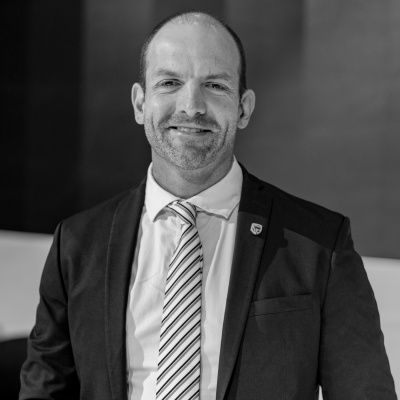
Louis Theron is head of investment and annuity products at Liberty Corporate Benefits.
Sign up to Currency’s weekly newsletters to receive your own bulletin of weekday news and weekend treats. Register here.