
Africa stands at a pivotal moment in its development journey. The continent’s resource abundance, the energy access imperative, industrial growth potential and youthful citizens present enormous commercial prospects.
But the next frontier of African energy will need to be defined differently. This definition will be shaped by whether we are bold enough to build solutions that are truly designed for Africans, by Africans, and with long-term national and continental development at the centre.
African legacies
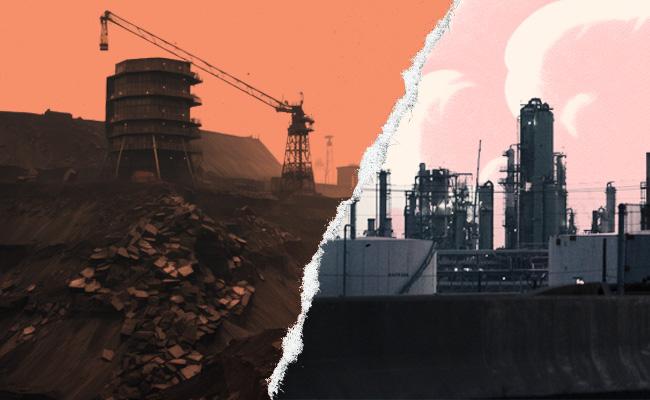
For decades, many of the systems that shaped African economies were designed with domestic interests as secondary. By 1913, as much as 90%-97% of the African continent had come under European colonial rule, an era that structured economies around the extraction of raw materials for export rather than the development of local value chains.
Infrastructure was often built to move resources efficiently to ports, not to connect domestic or continental markets to one another. Trade routes pointed outwards rather than inwards. The legacy of this model still shapes how our economies and societies function today.
The result is that Africa remains heavily dependent on exporting raw materials while importing finished goods. National interests are subordinated to the interests of global power. Intra-African trade remains relatively low, representing roughly 16% of total trade on the continent, far below levels seen in other regions.
Africa is extraordinarily rich in natural resources, human capital and innovation potential. The challenge for our common prosperity has never been abundance. The challenge has been the subordination of domestic interests.
Looking ahead
Across the continent, governments are articulating long-term development pathways: Kenya’s Vision 2030, Rwanda’s Vision 2050, Nigeria’s Energy Transition Plan, South Africa’s National Development Plan, to name a few. These frameworks reflect national priorities such as industrialisation, energy access, job creation and climate resilience.
Companies that wish to operate meaningfully across Africa must demonstrate an understanding of and commitment to align with sovereign priorities.
This requires humility and partnership. It also requires all parties – government, citizens and investors – to actively seek out new approaches that can result in continental prosperity.
From independence to interdependence
Political independence for many African countries was necessary and hard won. But the continent’s next transformation frontier will be driven by interdependence.
The African Continental Free Trade Area (AfCFTA) is a cornerstone of this shift. By creating a single market of more than 1.2-billion people, it aims to increase intra-African trade and build regional value chains.
Encouragingly, this vision is beginning to translate into tangible infrastructure projects. The Mozambique-Malawi Regional Interconnector, linking the Matambo substation in Mozambique to Phombeya in Malawi, will enable Malawi, long constrained by electricity shortages, to import power and support industrial activity.
Similarly, the Zambia-Tanzania Interconnector, part of the broader Zambia-Tanzania-Kenya corridor, will connect the Southern and East African power pools for the first time, creating a critical bridge between regional electricity markets and laying the groundwork for integrated industrial ecosystems.
These projects are more than technical achievements; they demonstrate what AfCFTA can unlock when policy is matched by execution.
Greater intra-African trade, supported by such infrastructure, can reduce external vulnerability, deepen regional integration and enable value-chain development across the continent. In an increasingly volatile global environment, interconnected African systems will be more resilient to external shocks while developing new manufacturing and industrial hubs.
Why new approaches matter
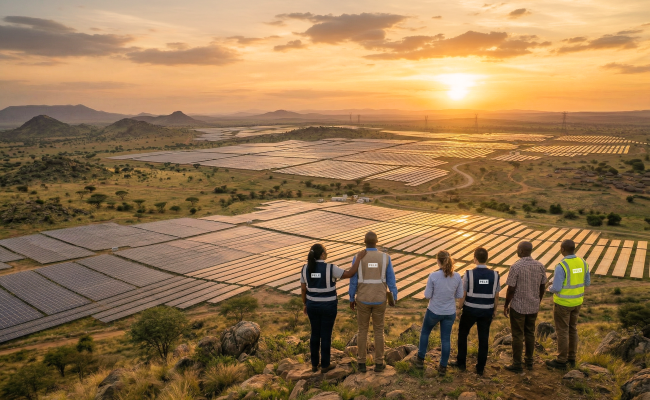
The concept of the “justice dividend” recognises that investments should create tangible social benefit beyond infrastructure and balance sheets. It must improve livelihoods, expand opportunity and strengthen local economies.
Given the continent’s legacies that continue to result in structurally rooted inequality, for African energy investors, applying this concept is critical. Projects can be designed not only to deliver megawatts but to create lasting impact in the communities and geographies where they operate.
Importantly, this approach is not only socially responsible but has proven to also be good for business.
None of this is achievable without rigorous governance. For the justice dividend to be realised at scale, companies must embed sound operational discipline wherever they operate, delivering projects on time, within budget, consistently. To achieve prosperous integrated African trade systems, sound governance must travel with companies wherever they operate.
The global energy transition is one of the defining economic transformations of our time. The world is confronting unprecedented levels of uncertainty and conflict linked to resource depletion. For resource-rich Africa, this moment presents an extraordinary opportunity to confront structural legacies of inequality and extraction, while also strengthening continental integration and prosperity. The quality of the business choices we make now will determine whether this generation builds an Africa of extraction, or one of integration and shared prosperity.
Brenda Martin is chair of Pele Energy Group.
Sign up to Currency’s weekly newsletters to receive your own bulletin of weekday news and weekend treats. Register here.