
When Monica Newton is asked how the 2026 National Arts Festival went, she gives the only honest answer any outgoing arts CEO could possibly give after 11 days of theatre, music, dance, comedy, visual art, catering crises, artists, audiences, funders, local politics, winter weather and presumably at least one printer refusing to work at the worst possible moment.
“On fumes sometimes,” she says. “But yeah, we’ve done it. It was a really great festival.”
The phrase captures the current condition of the Grahamstown Festival – sorry, the National Arts Festival in Makhanda. It is alive. It is smaller. It is getting no love from sports-mad/arts-allergic Minister of Sport, Arts and Culture Gayton McKenzie, who has all but pulled the plug on its funding from national government.
The 2026 festival, the 52nd edition, ran from 25 June to 5 July under the banner “Create New Worlds / Come Together”. Newton, who took over as CEO in January 2020, leaves after what can only be described as a briskly unfair tenure. She arrived just before Covid-19 flattened the live arts world, and then had to help reinvent a festival whose whole point was physical presence: people in rooms, performers on stages, strangers talking too loudly in coffee queues, critics lurking in corners and students developing strong opinions about experimental dance.
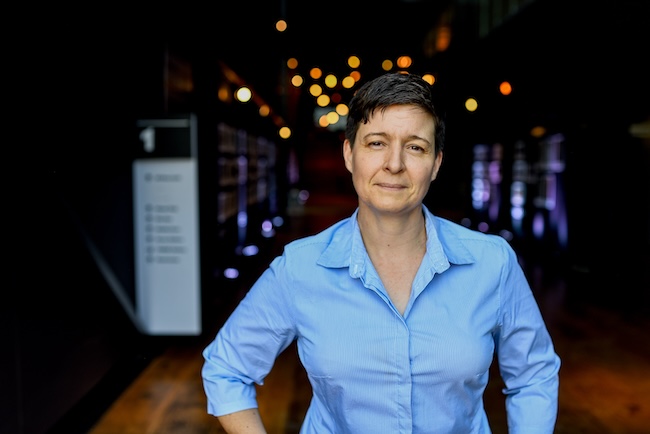
Her successor, Palesa Kadi, takes over on 1 August 2026, with the board explicitly crediting Newton for steering the institution through pandemic disruption, recovery and funding instability. Newton herself is philosophical about it. “Rather have the chaos of the arts and find your way,” she says, “than have everything look and sound the same.”
The National Arts Festival’s 2026 era
The 2026 festival leaned into that tension: indigenous knowledge, decolonial memory, AI, political trauma, circus, jazz, TikTok-era performance, old-school theatre and the unclassifiable category known as “festival things”, which is where many of the best and most alarming works usually live.
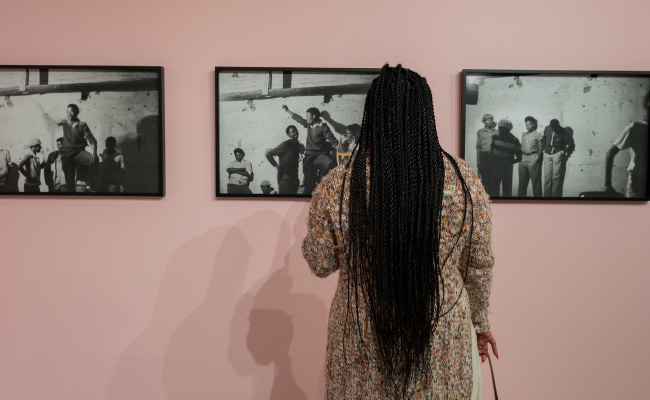
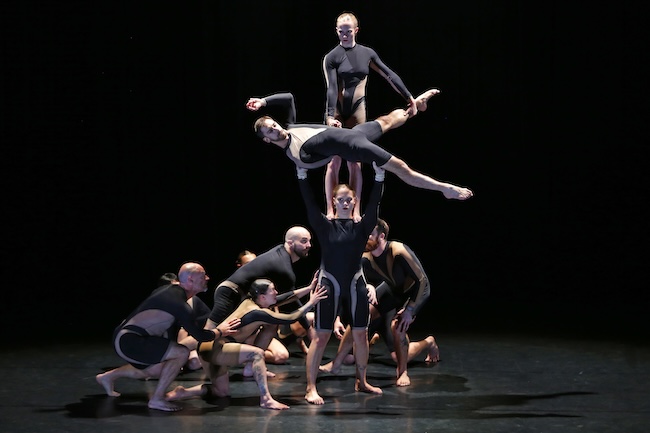
The programme included, among much else, Jason Jacobs’ Kraal, Bronwyn Katz’s Standard Bank Young Artist visual-art exhibition, Gabi Motuba’s jazz work, Ndumiso Manana’s music, the Soweto String Quartet marking 30 years since their first recording, and Wolf, an Australian circus work whose official description included the phrase “circus with fangs”, which frankly is the sort of phrase arts festivals were invented to provide.
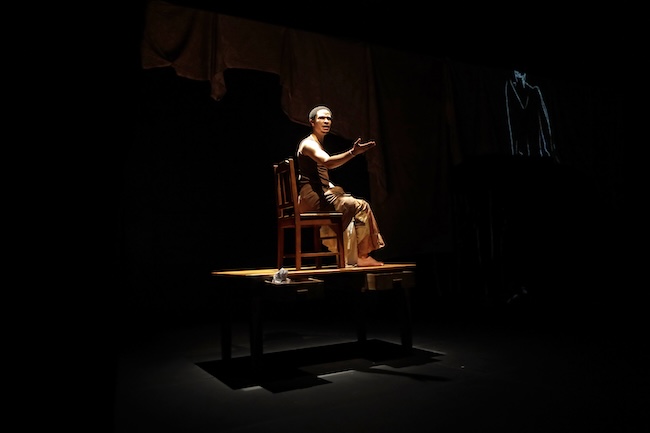
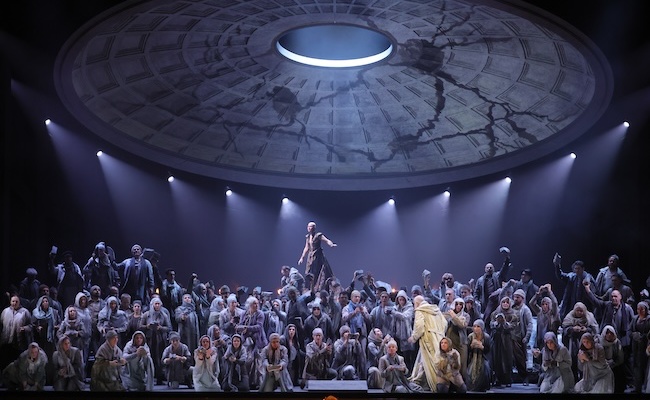
There was also autoplay, billed as an AI opera, because apparently even opera singers must now have a meeting with the machines. In one sense, this was very 2026. In another, the festival has always been like this: a place where technology, politics, memory, identity and spectacle are put in a small town and invited to fight it out for 11 days.
But it is a much circumscribed festival these days. Before Covid, the National Arts Festival had become enormous. Newton says 2019 was one of the largest festivals in its history, with roughly 760 productions in about 80 venues. This year, it staged about 240 productions in 28 to 33 venues, a scale that has held fairly consistently since the return of the big live festival in 2023.
That sounds, at first, like shrinkage. Newton presents it more as sanity.
Smaller and more focused
The festival is now smaller, more focused and more dependent on venues with enough capacity to make the arithmetic less punishing. It is also still a financial high-wire act in a town where the high wire itself may need sponsorship.
Newton says the National Arts Festival’s total annual income is about R55m, with the festival itself costing roughly R30m to R35m. Ticket revenue, however, accounts for only about 8% of total budget. If the festival charged what it actually costs to stage, she says, tickets would be about R1,000 each.
This is the central absurdity of the arts economy: everyone agrees the thing is valuable, but almost nobody can pay what it costs. The festival therefore lives, as arts institutions tend to live, by stitching together grants, sponsorships, partnerships, goodwill and administrative endurance.
Finding the funding
Newton says about 25% of current funding is private and the rest largely from government, while the ideal would be closer to a balanced “third, third, third” model: government, corporate and own revenue. Standard Bank remains an important long-term corporate partner, particularly through the Young Artist Awards and curated programme support, but Newton is clear that what the festival really needs is more multi-year corporate sponsorship.
It turns out that importance of the national department is not huge. The Department of Sport, Arts and Culture did provide an R800,000 Mzansi Golden Economy grant this year, which Newton says helped with a specific part of the programme, notably the Fringe. But in a multimillion-rand event, R800,000 is not the difference between life and death. The bigger issue is the loss or uncertainty of multi-year funding, because festivals are not things one can assemble on a Tuesday, like an emergency press conference or a coalition government. They take 12 to 18 months of planning.
No festival, she says, is entitled to government money. But large festivals need predictable funding if they are to plan properly. Government support also has signalling value: it tells other funders that the national government regards the institution as worth backing.
“It takes a nation to raise the National Arts Festival,” she says. On average, it has about 25 partners a year – financial partners, production partners, in-kind partners and event partners. The festival’s business model is not a profit machine, but a coalition of the willing.
The importance of the Fringe
The Fringe is increasingly central to that coalition. As the curated programme has become smaller, Newton says the Fringe has become more substantive, accounting for about 60% of ticket revenue. That is not just financially significant; it is also artistically important. The Fringe remains the democratic engine room of the festival, the place where reputations are made, revived, or occasionally discovered in a room containing 17 people and a heater making a troubling noise.
This year, Tony Miyambo’s Kafka’s Ape was one of the Fringe stories. Newton says Miyambo told her the work had not done particularly well when he brought it to the festival in 2012 and 2013. In 2026, it became one of the talked-about shows, selling out performances and, in Newton’s view, capable of selling out more had the production not been so physically demanding.
That is the festival at its best: a work returns, the audience is ready, and suddenly an old piece becomes a new event.
More 2026 highlights
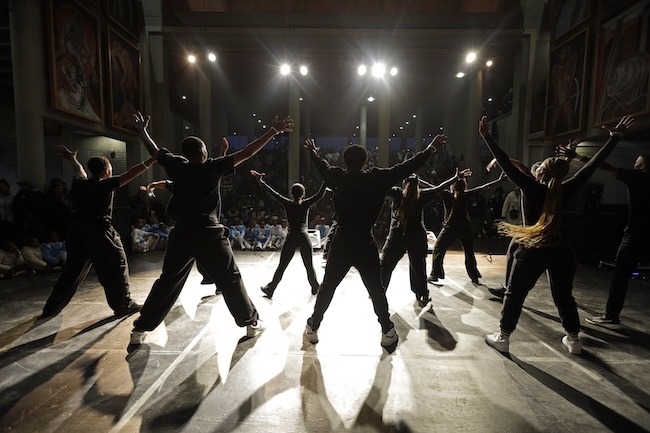
There were other highlights. Andrew Buckland returned with The Ugly Noo-Noo and Fool’s Guide. Msaki and the ALTBLK collective drew audiences. The Soweto String Quartet celebrated three decades. Lee-ché Janecke, the 2026 Standard Bank Young Artist for Dance, brought the kind of physical voltage that had people dancing in the aisles. And Wolf, the Australian circus production, apparently reminded audiences that the human body is an astonishing instrument, especially when used by people who are not the rest of us.
Press coverage suggested something similar: the streets of Makhanda may have seemed quieter at times, but inside the venues, audiences were showing up. The Mail & Guardian reported strong theatre audiences, several sold-out performances and 11,000 people through the Village Green market over one weekend.
The old image of the Grahamstown Festival was one of total takeover: streets heaving, pubs full, students everywhere, artists identifiable by scarves, and the whole town seeming to vibrate on caffeine and criticism. The newer version may be less sprawling, more concentrated and more budget-conscious. Younger audiences are coming, Newton says, but they have less to spend. The festival responds by keeping tickets as affordable as it can and offering free exhibitions, workshops and daily concerts.
Makhanda as host city
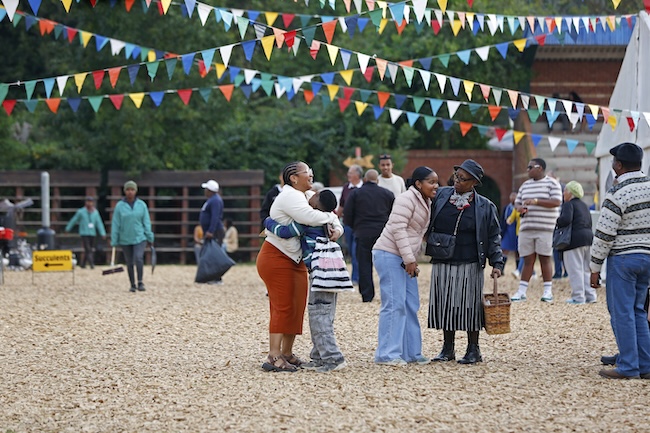
The other part of the story is Makhanda itself. Newton is emphatic that the festival is not only an 11-day cultural event but a year-round local institution. Through a Social Employment Fund project, she says the organisation has employed just under 6,000 people since 2022 and invested about R175m into the city, 80% of it in wages. It also hosts events outside the festival period and runs other cultural programmes through the year.
The 2024 impact study, she says, indicated about R131m in economic impact for the province and just under R60m for Makhanda itself. The festival deliberately tries to spend locally, both in the town and in the Eastern Cape.
Future perfect?
Newton does not pretend the festival can simply return to its old size. Bigger is not necessarily better, she says, though more funding would allow for more international programming, residencies and deeper access work, especially on the east side of Makhanda, where municipal venues are no longer what they were and where the festival has receded more than it would like.
The festival is not dying. It is not booming in the old way either. It is adapting, narrowing, hustling, trying to keep tickets cheap, trying to pay artists, trying to bring people into rooms, trying to make the east side of town part of the festival again, and trying to convince a country with many emergencies that imagination is not a luxury item.
Newton now leaves for Gauteng and a new role, while Palesa Kadi inherits an institution that is smaller than the old Grahamstown behemoth but perhaps more legible, more focused and more representative of the country around it. Kadi brings experience across heritage, media, broadcasting regulation and cultural policy, and returns to her home province to run one of South Africa’s most symbolically loaded cultural institutions.
Looking for more Currency takes on art and culture? Find them here.
Top image collage: Rawpixel; Currency.
Sign up to Currency’s weekly newsletters to receive your own bulletin of weekday news and weekend treats. Register here.