
If you haven’t discovered JCAF yet, here’s your excuse. Tucked just off Jan Smuts Avenue in leafy Forest Town, the Joburg Contemporary Art Foundation occupies a beautifully restored former tram substation. It’s one of those places that surprises you, not just because of the architecture, and slightly secret location, but because it completely rethinks what an art exhibition can be.
Rather than simply hanging artworks on white walls, JCAF builds exhibitions around big ideas, combining contemporary art, film, sound and technology in ways that encourage visitors to slow down and look closely. Don’t worry, though, this isn’t an exercise in painful, worthy art-world jargon. The ideas are ambitious, but the experience and space are engaging and accessible.
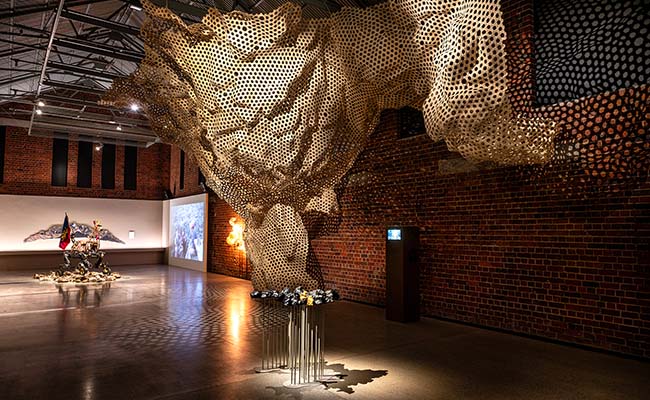
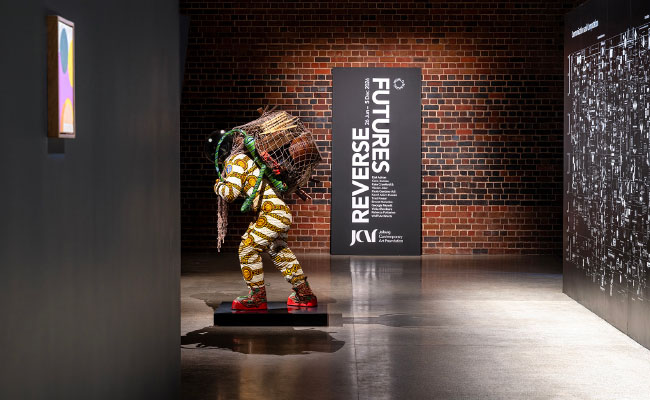
Its latest exhibition, Reverse Futures, which opened at the end of June, explores ideas of the future through the lens of the Global South, bringing together artists from around the world to tackle themes such as colonialism, migration and technology. At its heart is the idea that understanding the past is essential to understanding where we’re headed, and the future we’re creating.
Even tackling such a weighty topic, this is an exhibition that rewards curiosity rather than feeling academic. Wander through at your own pace, spend time with the works that intrigue you, and don’t worry about “getting it right”.
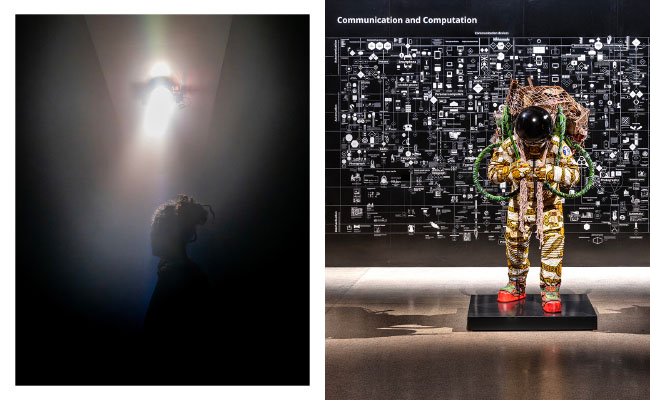
Two pieces, in particular, stood out during our visit. Calculating Empires: A Genealogy of Technology and Power Since 1500 by Kate Crawford and Vladan Joler is a monumental wall-sized timeline tracing five centuries of technological innovation. It’s the sort of piece you could happily lose yourself in.
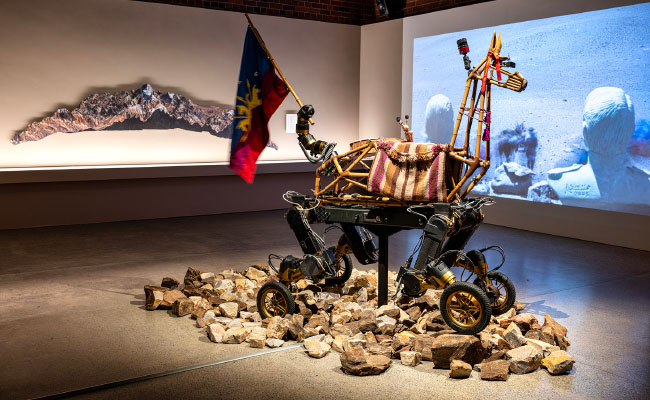
Then there’s Guanaquerx by Paula Gaetano Adi, which may just be the exhibition’s most charming resident. The robotic artwork reimagines technology not as something frightening or dystopian, but as a curious explorer inspired by the Andes and its communities. Watching it move is unexpectedly delightful, and it’s impossible not to find yourself rooting for the little robot.
We always spread the word about JCAF’s new shows, because they continually hit the mark on quality and creativity. They’re also proof that contemporary art can be both intellectually stimulating and genuinely enjoyable.
Visiting JCAF is free, but by appointment only. For more information or to book, visit the JCAF website.
ALSO READ:
- Hidden in plain sight: why you must visit JCAF
- Stormy weather, serene music at the Venice Biennale
- Beyond photography: Standard Bank Art Lab honours Santu Mofokeng
Top image: Reverse Futures exhibition. From left: Etel Adnan’s Satellites 27 (2020), Yinka Shonibare’s Refugee Astronaut X (2024), and Calculating Empires: A Genealogy of Technology and Power since 1500 (2023) by Kate Crawford and Vladan Joler. Picture: Graham De Lacy/supplied.
Sign up to Currency’s weekly newsletters to receive your own bulletin of weekday news and weekend treats. Register here.